
Cost to Build an App in India: A 2026 Founder's Guide
A practical guide to app development cost in India, including MVP budgets, enterprise complexity, team structure, hidden costs, and planning tips.
Vikram Iyer
Author
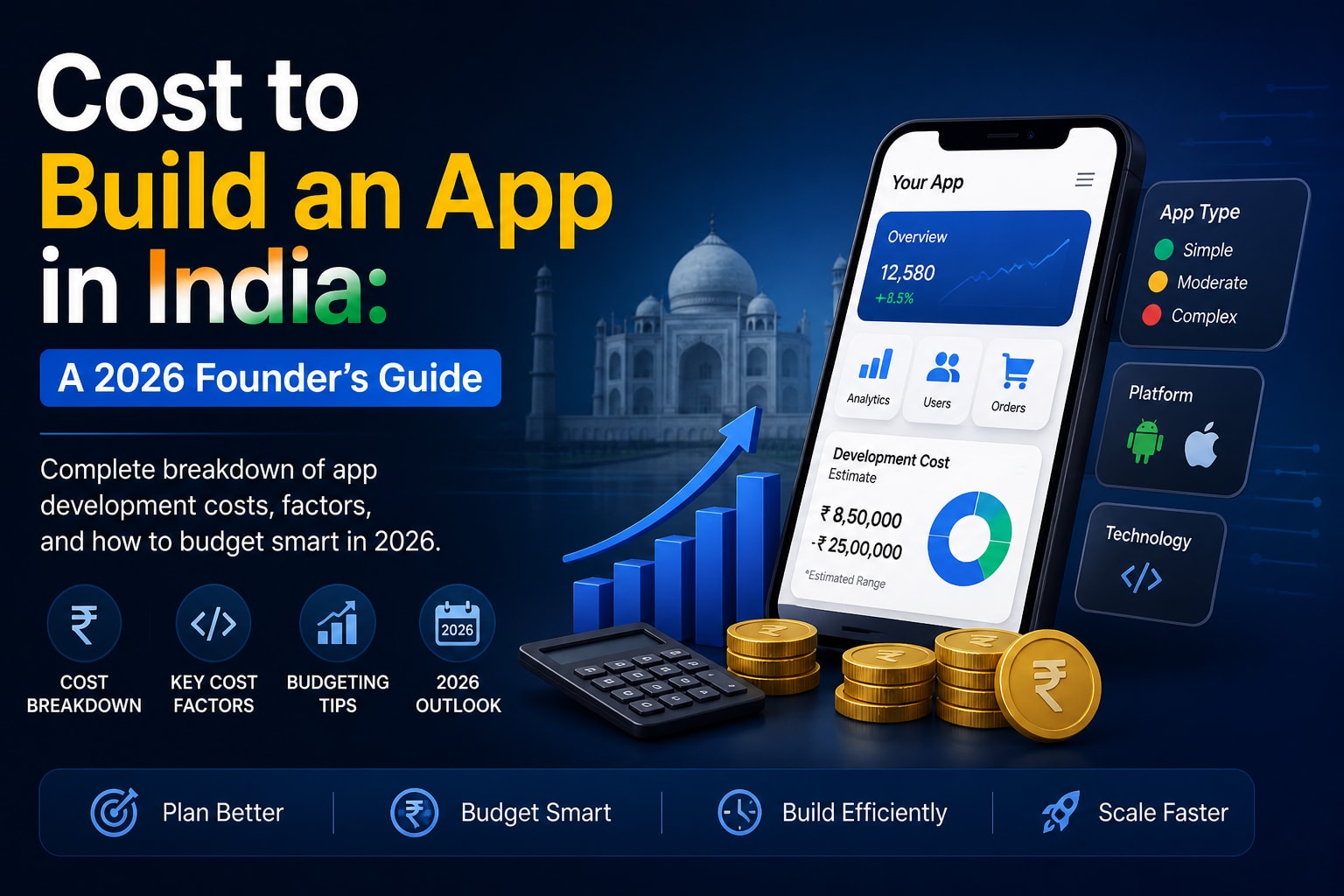
Building an app in India can be cost-efficient, but the cheapest quote is rarely the safest path. A realistic budget depends on product complexity, integrations, security expectations, design maturity, and the team required to support the product after launch.
Quick Summary
A strong software decision starts with the business goal, the user workflow, and the operating constraints. The technology stack matters, but it should support clear outcomes: faster releases, lower manual work, better customer experience, stronger security, and measurable return on investment.
Use this guide as a practical planning document before you commit budget, hire a team, or rebuild an existing system.
What Teams Should Evaluate First
| Area | What to check | Why it matters |
|---|---|---|
| Scope | MVP, full product, or enterprise platform | Scope controls team size, timeline, QA depth, and release risk |
| Architecture | Single app, multi-role system, SaaS, or marketplace | Complex roles and workflows increase backend and testing effort |
| Integrations | Payments, CRM, ERP, maps, analytics, notifications | Third-party APIs often add edge cases and compliance work |
| Security | Auth, permissions, audit logs, encryption, reviews | Security must be planned before launch, not patched later |
Typical Cost Ranges
A focused MVP may fit a lean budget when the workflow is simple and integrations are limited. A full product needs deeper UX, backend architecture, analytics, admin tools, QA, and deployment automation. Enterprise systems need discovery, stakeholder alignment, access controls, integration testing, reporting, and post-launch support.
- MVP: validate one core workflow before building every feature.
- Growth product: invest in onboarding, admin tooling, analytics, and retention loops.
- Enterprise platform: budget for security, documentation, change management, and support.
Hidden Costs That Teams Miss
Many budgets only include screens and APIs. Real products also need product management, test planning, cloud infrastructure, monitoring, backups, app store work, content, analytics, and support. These are not extras; they are part of a launch-ready system.
- Design revisions after user feedback.
- Cloud usage, email, SMS, storage, and payment fees.
- Regression testing after every release.
- Maintenance for dependencies and security patches.
How to Control Budget Without Lowering Quality
The best way to reduce cost is not to cut engineering quality. It is to reduce uncertainty. Start with discovery, prioritize features by business impact, choose a release plan, and build the smallest version that proves user value.
- Use a discovery sprint before fixed-cost commitments.
- Separate must-have workflows from future roadmap ideas.
- Build reusable components and clean APIs from the start.
- Review progress weekly with working demos.
Practical Example
A founder building a food delivery MVP may start with customer ordering, restaurant acceptance, rider assignment, payment, and admin order tracking. Advanced loyalty, route optimization, wallet, and multi-city operations can be staged after the first launch. For similar execution patterns, review the Food Delivery Application case study.
Related Vayqube Resources
- Custom Software Development
- Mobile App Development
- Ecommerce Industry Solutions
- Food Delivery Application
FAQ
How long does an MVP take?
A focused MVP usually takes a few weeks to a few months depending on workflows, integrations, and approval speed.
Should I choose fixed price or dedicated team?
Fixed price works for stable scope. A dedicated team is better when the roadmap will evolve after user feedback.
What should be included in a serious estimate?
A serious estimate includes UX, frontend, backend, admin, integrations, QA, deployment, analytics, and support assumptions.
Next Step
If you are comparing quotes, bring the feature list, launch goal, target users, and expected timeline.
Talk to a Vayqube solution architect and get a practical roadmap for scope, team, architecture, timeline, and launch risk.