
Unlocking the Future of Enterprise Web Applications
Explore the evolving landscape of enterprise web applications and learn how to leverage the latest technologies to drive business growth and success.
Vayqube Team
Author
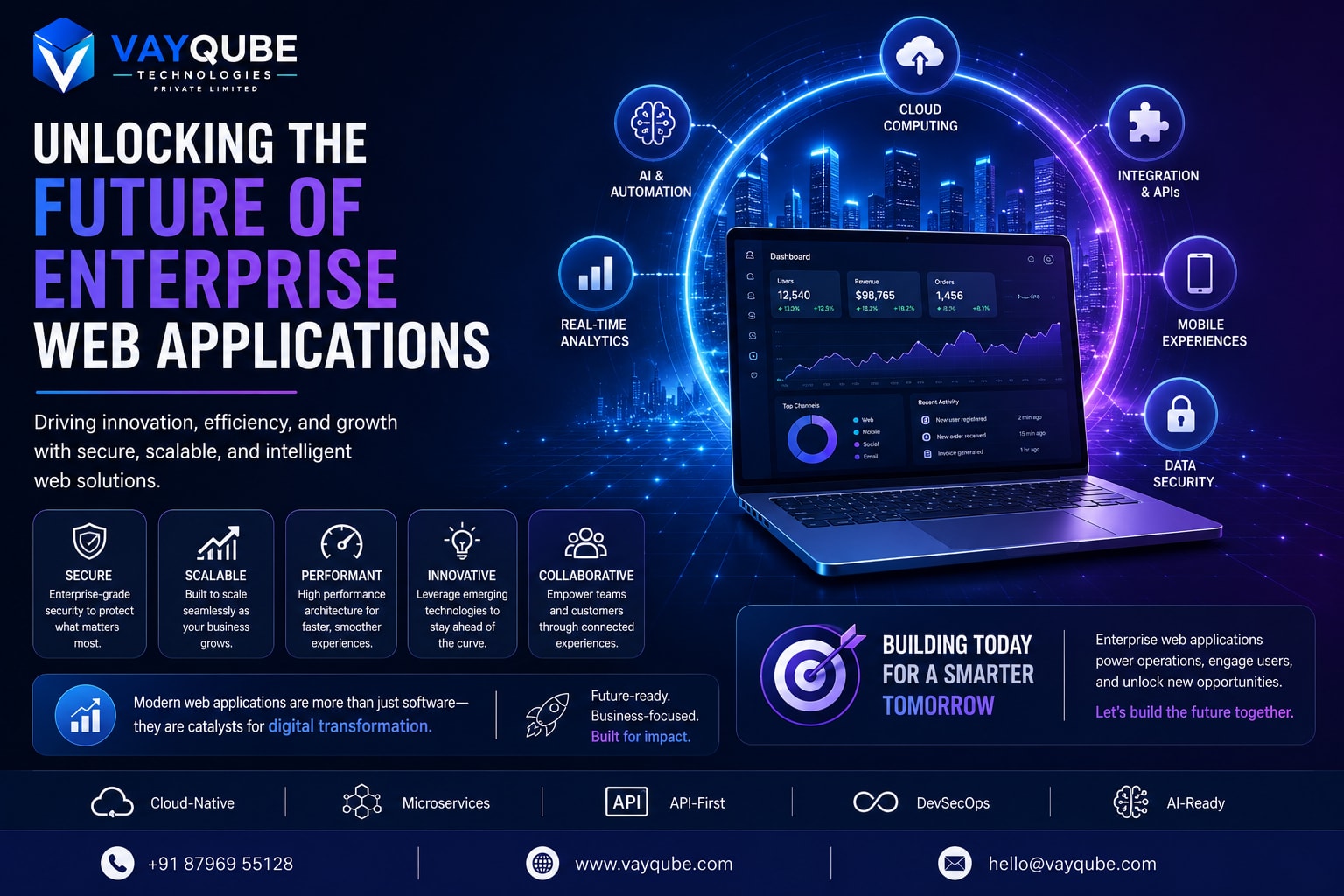
Introduction to Modern Enterprise Web Applications
Enterprise web applications have become the backbone of modern businesses, enabling organizations to streamline operations, enhance customer experiences, and drive revenue growth. The evolution of web application development has been significant, with a shift from traditional, monolithic architectures to more agile, cloud-native, and microservices-based approaches.
The Evolution of Web Application Development
Over the years, web application development has undergone significant transformations, driven by advances in technology, changing user expectations, and the need for greater scalability and flexibility. Early web applications were often simple, static websites, while modern web applications are complex, dynamic, and highly interactive. This evolution has been marked by the adoption of new programming languages, frameworks, and tools, such as JavaScript, React, and Node.js.
The Importance of Modernizing Web Applications
Modernizing web applications is crucial for businesses to remain competitive in today's fast-paced digital landscape. Legacy web applications often struggle to meet the demands of modern users, who expect seamless, personalized, and omnichannel experiences. By modernizing their web applications, businesses can improve user engagement, increase conversion rates, and reduce the risk of security breaches and downtime. Some key benefits of modernizing web applications include:
- Enhanced user experiences through responsive design and intuitive interfaces
- Improved scalability and performance through cloud-native architectures and microservices
- Increased security and compliance through advanced authentication and authorization mechanisms
- Better integration with emerging technologies, such as artificial intelligence, blockchain, and the Internet of Things (IoT)
Real-World Examples and Production Considerations
Many businesses have successfully modernized their web applications, achieving significant improvements in performance, security, and user engagement. For example, a leading e-commerce company modernized its web application using a microservices-based architecture, resulting in a 30% increase in sales and a 25% reduction in downtime. When modernizing web applications, businesses must consider production readiness, ensuring that the new application is thoroughly tested, validated, and optimized for deployment in a production environment. This includes considerations such as:
- Continuous integration and continuous deployment (CI/CD) pipelines
- Automated testing and quality assurance
- Monitoring and logging mechanisms
- Scalability and performance optimization
Implementation Strategy and Next Steps
To unlock the future of enterprise web applications, businesses must develop a clear implementation strategy, taking into account their unique needs, goals, and requirements. This involves assessing the current state of their web applications, identifying areas for improvement, and selecting the right technologies, tools, and partners to support their modernization efforts. By doing so, businesses can create web applications that are more agile, responsive, and user-centric, driving long-term growth, innovation, and success.
Why It Matters
The future of enterprise web applications has a significant impact on business operations and revenue. In today's digital landscape, a well-designed and functional web application can be a major differentiator for companies, setting them apart from competitors and driving business growth.
Business Operations and Revenue
A modern enterprise web application can streamline business operations, improve efficiency, and reduce costs. By automating manual processes and providing real-time insights, companies can make data-driven decisions, respond quickly to changing market conditions, and stay ahead of the competition. This, in turn, can lead to increased revenue and improved profitability.
Enhancing User Experience and Engagement
A user-centric web application can also enhance customer experience and engagement, leading to increased loyalty and retention. By providing a seamless and intuitive user interface, companies can reduce friction, improve conversion rates, and increase customer satisfaction. This can be achieved through features such as personalized content, responsive design, and real-time feedback.
Staying Competitive in a Digital Landscape
In a digital landscape where companies are constantly evolving and innovating, staying competitive is crucial for survival. A modern enterprise web application can help companies stay ahead of the curve by providing a flexible and scalable platform for innovation. By leveraging the latest technologies and trends, companies can quickly respond to changing market conditions, experiment with new business models, and stay competitive in a rapidly changing environment.
Some key benefits of a modern enterprise web application include:
- Improved business agility and responsiveness
- Enhanced customer experience and engagement
- Increased revenue and profitability
- Better competitiveness in a digital landscape
- Improved operational efficiency and reduced costs
By investing in a modern enterprise web application, companies can unlock new opportunities for growth, innovation, and success. This can be achieved by focusing on the key principles of user experience, scalability, and innovation, and by leveraging the latest technologies and trends to stay ahead of the competition.
Implementation Considerations
When implementing a modern enterprise web application, companies should consider several key factors, including scalability, security, and integration with existing systems. By taking a strategic and thoughtful approach to implementation, companies can ensure a smooth transition, minimize disruption to business operations, and maximize the benefits of their new web application.
Core Architecture
To unlock the future of enterprise web applications, a robust core architecture is essential. This involves adopting a microservices-based approach, where applications are broken down into smaller, independent services that communicate with each other through APIs.
Microservices and Containerization
Microservices offer greater flexibility, scalability, and resilience compared to traditional monolithic architectures. By containerizing these services using tools like Docker, enterprises can ensure consistent and reliable deployments across different environments. This approach enables development teams to work on individual services independently, reducing the complexity and risk associated with large-scale application updates.
Cloud-Native Design and Deployment
A cloud-native design allows enterprise web applications to take full advantage of cloud computing benefits, such as on-demand scalability, high availability, and reduced infrastructure costs. By leveraging cloud providers like AWS, Azure, or Google Cloud, businesses can deploy their applications in a way that is optimized for the cloud, using services like serverless computing, managed databases, and auto-scaling to ensure the application can handle varying loads without manual intervention.
API-Driven Integration and Scalability
APIs are the backbone of modern enterprise web applications, enabling different microservices to communicate seamlessly and facilitating integration with external services. An API-driven approach ensures that applications can scale more efficiently, as each service can be scaled independently based on demand. This scalability, combined with the flexibility of microservices and the power of cloud-native deployment, allows businesses to respond quickly to changing market conditions and customer needs, ultimately driving innovation and competitiveness.
Key considerations for implementing such an architecture include:
- Ensuring seamless communication between microservices
- Implementing robust security measures to protect data and services
- Adopting agile development methodologies to facilitate rapid iteration and deployment
- Monitoring and logging applications to ensure performance and reliability
- Continuously evaluating and improving the architecture based on real-world usage and feedback.
By focusing on these core architectural elements, enterprises can build web applications that are not only highly scalable and resilient but also capable of adapting to the ever-changing demands of the digital landscape.
Business Benefits
The adoption of modern enterprise web applications can have a profound impact on an organization's overall performance and competitiveness. By leveraging the latest technologies and design principles, businesses can unlock significant benefits that drive growth, innovation, and success.
Improved Agility and Responsiveness
One of the primary advantages of modern enterprise web applications is their ability to improve agility and responsiveness. With the ability to quickly deploy new features and updates, businesses can respond rapidly to changing market conditions, customer needs, and emerging trends. This enables organizations to stay ahead of the competition, capitalize on new opportunities, and drive innovation.
- Faster time-to-market for new products and services
- Enhanced ability to adapt to changing customer needs and preferences
- Improved responsiveness to emerging trends and market shifts
Increased Efficiency and Productivity
Modern enterprise web applications can also drive significant improvements in efficiency and productivity. By automating manual processes, streamlining workflows, and providing real-time visibility into key metrics and performance indicators, businesses can optimize their operations, reduce waste, and improve overall performance.
- Automation of manual processes and workflows
- Real-time visibility into key metrics and performance indicators
- Improved collaboration and communication across teams and departments
Enhanced Security and Compliance
In addition to improving agility and efficiency, modern enterprise web applications can also enhance security and compliance. With the latest security protocols, encryption methods, and access controls, businesses can protect sensitive data, prevent unauthorized access, and ensure compliance with regulatory requirements.
- Advanced security protocols and encryption methods
- Robust access controls and identity management
- Compliance with regulatory requirements and industry standards
By leveraging these benefits, businesses can unlock the full potential of modern enterprise web applications and drive significant improvements in their overall performance, competitiveness, and success. Whether it's improving agility, increasing efficiency, or enhancing security, the advantages of modern enterprise web applications are clear, and the opportunities for growth and innovation are substantial.
Scalability
To ensure the long-term success of enterprise web applications, scalability is a critical factor. As the user base and data volume grow, the application must be able to handle increased traffic and large datasets without compromising performance.
Horizontal Scaling and Load Balancing
Horizontal scaling, also known as scaling out, involves adding more servers or instances to distribute the workload. This approach allows for greater flexibility and scalability, as new servers can be easily added or removed as needed. Load balancing is a crucial component of horizontal scaling, as it ensures that incoming traffic is distributed evenly across all available servers. This helps to prevent bottlenecks and ensures that no single server is overwhelmed.
- Key benefits of horizontal scaling and load balancing include:
- Improved responsiveness and reduced latency
- Increased reliability and fault tolerance
- Enhanced scalability and flexibility
- Better resource utilization and reduced waste
Autoscaling and Resource Optimization
Autoscaling involves automatically adding or removing resources based on demand. This approach ensures that the application always has the necessary resources to handle changing workloads, without wasting resources during periods of low demand. Resource optimization is also critical, as it involves ensuring that resources are being used efficiently and effectively. This can involve techniques such as caching, content delivery networks (CDNs), and database optimization.
- Best practices for autoscaling and resource optimization include:
- Monitoring application performance and resource utilization in real-time
- Setting clear thresholds and triggers for autoscaling
- Implementing efficient caching and CDNs to reduce latency and improve performance
- Optimizing database queries and schema design for improved performance and scalability
Handling High Traffic and Large Datasets
Handling high traffic and large datasets requires careful planning and optimization. This can involve techniques such as data partitioning, indexing, and query optimization. It's also important to ensure that the application is designed to handle high concurrency and can scale to meet changing demands.
- Real-world examples of handling high traffic and large datasets include:
- Using distributed databases and data warehousing to handle large datasets
- Implementing message queues and job scheduling to handle high concurrency
- Using cloud-based services and autoscaling to handle sudden spikes in traffic
- Optimizing application code and database queries for improved performance and scalability
By implementing these strategies, enterprise web applications can ensure scalability, reliability, and high performance, even in the face of rapidly changing demands and large datasets.
Implementation Challenges
When implementing enterprise web applications, several challenges arise that can impact the success of the project.
Legacy System Integration and Migration
One of the primary challenges is integrating with legacy systems and migrating existing data and processes. This requires careful planning and execution to ensure minimal disruption to business operations. Key considerations include:
- Assessing the current system's architecture and identifying potential integration points
- Developing a migration strategy that minimizes data loss and ensures continuity
- Implementing data validation and testing to ensure accuracy and consistency
Change Management and Training
Another significant challenge is managing change and providing adequate training to end-users. This involves:
- Developing a comprehensive change management plan that addresses organizational, procedural, and technological changes
- Creating training programs that cater to different user groups and learning styles
- Providing ongoing support and feedback mechanisms to ensure users can effectively utilize the new system
Ensuring Seamless User Experience
Ensuring a seamless user experience is crucial to the adoption and success of the enterprise web application. This can be achieved by:
- Conducting user research and testing to identify pain points and areas for improvement
- Implementing intuitive and responsive design elements that simplify user interactions
- Continuously monitoring user feedback and iterating on the design and functionality to ensure it meets evolving user needs
As enterprises navigate these implementation challenges, it is essential to prioritize a user-centered approach, leveraging real-world examples and production considerations to inform design and development decisions. By doing so, organizations can unlock the full potential of their enterprise web applications and drive business growth and innovation.
Production Readiness
To ensure production readiness, enterprises must also consider factors such as:
- Scalability and performance under heavy loads
- Security and compliance with regulatory requirements
- Integration with existing infrastructure and systems By carefully addressing these factors, organizations can ensure a smooth transition to production and minimize the risk of downtime or errors.
Real-World Examples
Real-world examples of successful enterprise web application implementations can provide valuable insights and lessons learned. For instance, a large financial services company may have implemented a custom web application to streamline customer onboarding, resulting in significant reductions in processing time and improvements in user satisfaction. By studying such examples, organizations can gain a deeper understanding of the challenges and opportunities involved in implementing enterprise web applications.
Use Cases
Enterprise web applications have transformed the way businesses operate, and their use cases continue to expand across various industries. Real-world examples of successful implementations demonstrate the potential of these applications to drive innovation and growth.
Industry-Specific Applications
Several industries have seen significant benefits from enterprise web applications, including:
- Healthcare: secure patient data management and telemedicine platforms
- Finance: online banking and trading platforms, as well as risk management systems
- Retail: e-commerce platforms and inventory management systems These industry-specific applications have improved operational efficiency, enhanced customer experience, and reduced costs.
Innovative Use Cases
Innovative use cases and emerging trends are pushing the boundaries of enterprise web applications. For instance:
- Artificial intelligence and machine learning integrations to enhance predictive analytics and automation
- Internet of Things (IoT) integrations to enable real-time monitoring and control
- Blockchain-based applications to ensure secure and transparent data management These innovative use cases are opening up new opportunities for businesses to leverage enterprise web applications and stay ahead of the competition.
Emerging Trends
Emerging trends in enterprise web applications are focused on improving user experience, enhancing security, and increasing scalability. Some of the key trends include:
- Cloud-native applications to enable greater flexibility and scalability
- Mobile-first design to cater to the growing number of mobile users
- DevOps and continuous integration to streamline development and deployment These trends are shaping the future of enterprise web applications and enabling businesses to build more robust, secure, and user-friendly solutions.
Real-World Examples
Real-world examples of successful implementations demonstrate the potential of enterprise web applications to drive business growth and innovation. For example:
- A leading retail company implemented an e-commerce platform that resulted in a 30% increase in online sales
- A healthcare organization developed a telemedicine platform that reduced patient wait times by 50%
- A financial institution built a risk management system that reduced operational risk by 25% These examples illustrate the tangible benefits of enterprise web applications and their potential to transform businesses across various industries.
Best Practices
To ensure the success of enterprise web applications, it's crucial to follow best practices that prioritize scalability, security, and performance.
Designing for Scalability and Performance
Designing for scalability and performance is essential for handling increased traffic and large amounts of data. This involves:
- Using cloud-based infrastructure to easily scale up or down as needed
- Implementing load balancing to distribute traffic across multiple servers
- Optimizing database queries and indexing for faster data retrieval
- Leveraging caching mechanisms to reduce the load on servers and databases
Implementing Robust Security Measures
Implementing robust security measures is critical for protecting sensitive data and preventing cyber threats. This includes:
- Using encryption to protect data in transit and at rest
- Implementing secure authentication and authorization protocols
- Conducting regular security audits and penetration testing
- Keeping software and systems up to date with the latest security patches
Monitoring and Optimizing Application Performance
Monitoring and optimizing application performance is vital for ensuring a seamless user experience. This involves:
- Using monitoring tools to track application performance and identify bottlenecks
- Analyzing user feedback and behavior to identify areas for improvement
- Conducting regular performance testing and optimization
- Implementing automation and orchestration tools to streamline deployment and management
By following these best practices, enterprises can ensure their web applications are scalable, secure, and high-performing, leading to improved user satisfaction, increased productivity, and reduced costs.
Real-World Examples
Real-world examples of successful enterprise web applications include:
- Online banking platforms that handle millions of transactions per day
- E-commerce websites that process large volumes of orders and payments
- Social media platforms that handle massive amounts of user-generated content These examples demonstrate the importance of scalability, security, and performance in enterprise web applications.
Production Considerations
When deploying enterprise web applications to production, it's essential to consider factors such as:
- Disaster recovery and business continuity planning
- Compliance with regulatory requirements and industry standards
- Integration with existing systems and infrastructure
- Ongoing maintenance and support to ensure continued performance and security.
Frequently Asked Questions
To address common questions and concerns, we've compiled a list of FAQs that provide clarity on the future of enterprise web applications.
Common Misconceptions
Some common misconceptions about enterprise web applications include:
- They are too complex to implement and maintain
- They are not scalable or secure
- They are too expensive to develop and deploy However, with the right approach and technology, these concerns can be mitigated, and the benefits of enterprise web applications can be fully realized.
Addressing Concerns
Addressing concerns and misconceptions is crucial to ensuring a smooth transition to enterprise web applications. This includes:
- Providing education and training on the benefits and implementation of enterprise web applications
- Offering support and resources to help organizations overcome common challenges
- Sharing real-world examples and case studies of successful implementations
Additional Resources
For organizations looking to learn more about enterprise web applications, there are several additional resources available, including:
- Industry reports and research studies
- Webinars and online tutorials
- Community forums and discussion groups These resources can provide valuable insights and information to help organizations make informed decisions about their enterprise web application strategy.
Next Steps
As organizations consider the future of their enterprise web applications, it's essential to take a proactive and strategic approach. This includes:
- Assessing current infrastructure and applications
- Identifying areas for improvement and opportunities for growth
- Developing a roadmap for implementation and deployment By taking these steps, organizations can unlock the full potential of enterprise web applications and stay ahead of the curve in today's fast-paced digital landscape.
Support and Guidance
For organizations that need additional support and guidance, there are several options available, including:
- Consulting services and expert advice
- Implementation and deployment support
- Ongoing maintenance and management These services can help organizations ensure a successful implementation and maximize the benefits of their enterprise web applications.
Conclusion
The future of enterprise web applications is rapidly evolving, and it's essential to stay ahead of the curve. In this article, we've explored the key considerations for unlocking the full potential of enterprise web applications.
Recap of Key Takeaways
The core architecture of modern web applications is built around scalability, security, and flexibility. We've discussed the business benefits of adopting a cloud-native approach, including reduced costs, increased agility, and improved customer experiences. Additionally, we've examined the implementation challenges and use cases that demonstrate the value of enterprise web applications in real-world scenarios.
Future Outlook and Emerging Trends
As we look to the future, emerging trends such as serverless computing, artificial intelligence, and the Internet of Things (IoT) will continue to shape the landscape of enterprise web applications. These technologies will enable new levels of automation, personalization, and innovation, driving business growth and competitiveness.
Call to Action and Next Steps
To stay ahead of the curve, enterprises must prioritize investment in modern web application development, focusing on scalability, security, and user experience. This includes:
- Adopting a cloud-native approach to reduce costs and increase agility
- Leveraging emerging technologies such as AI and IoT to drive innovation
- Developing a robust implementation strategy that addresses challenges and ensures production readiness
- Fostering a culture of continuous learning and improvement, staying up-to-date with the latest trends and best practices
By taking these steps, enterprises can unlock the full potential of enterprise web applications, driving business growth, improving customer experiences, and staying competitive in a rapidly evolving market. The future of enterprise web applications is exciting and full of possibilities, and by embracing the latest technologies and trends, businesses can thrive in this new landscape.
Production Readiness and Real-World Examples
Enterprises must prioritize production readiness, ensuring that their web applications are scalable, secure, and reliable. Real-world examples of successful enterprise web applications demonstrate the value of this approach, with companies such as Netflix and Amazon achieving remarkable success through their cloud-native architectures. By following in their footsteps, businesses can achieve similar results, driving growth and innovation through the power of modern web applications.
Implementation Strategy and Business Impact
A well-planned implementation strategy is critical to the success of enterprise web applications. This includes assessing business needs, identifying potential challenges, and developing a robust plan for deployment and maintenance. By prioritizing business impact and focusing on the needs of users, enterprises can create web applications that drive real value and growth, improving customer experiences and driving competitiveness.
Final Thoughts
The future of enterprise web applications is bright, with emerging trends and technologies offering new opportunities for growth and innovation. By prioritizing investment in modern web application development, adopting a cloud-native approach, and focusing on scalability, security, and user experience, enterprises can unlock the full potential of these powerful tools, driving business success and staying competitive in a rapidly evolving market.
Related Vayqube Resources
- How To Build Fintech Application Payments Security Scaling
- Best Mobile App Development Company In Usa
- Best Mobile App Development Company In New York
- Best Software Development Company In Usa
- Best Software Development Company In New York
- Best Mobile App Development Company In India
Next Step
If your systems are struggling with scalability, automation, architecture complexity, or operational efficiency, it's time to modernize your infrastructure and workflows.
👉 Talk to a Vayqube solution architect and build systems designed for long-term production growth: