
Next.js Boosts SEO Performance
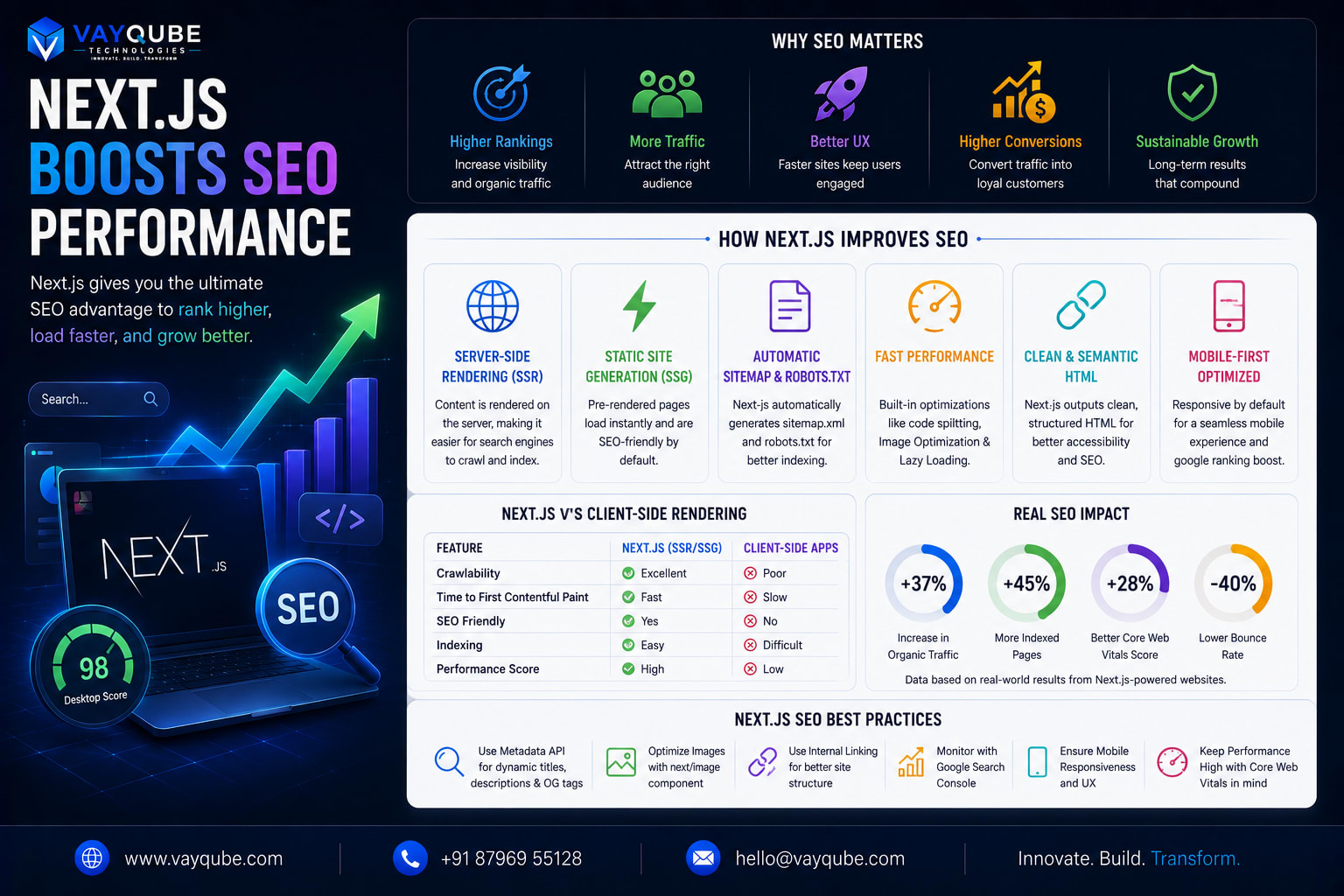
Next.js enhances SEO performance through its built-in features like server-side rendering and static site generation. By leveraging these features, developers can improve their website's search engine rankings and drive more organic traffic
Vayqube Team
Software architecture and product engineering
Introduction to Next.js and SEO
Next.js is a popular React-based framework for building server-side rendered and statically generated websites and applications. It provides a robust set of features that enable developers to create fast, scalable, and performance-optimized web applications. One of the key benefits of using Next.js is its ability to boost SEO performance.
Overview of Next.js
Next.js offers a range of features that make it an ideal choice for building modern web applications. These include server-side rendering, static site generation, and incremental static regeneration. Server-side rendering allows for faster page loads and improved SEO, as search engines can crawl and index pages more efficiently. Static site generation enables developers to pre-render pages at build time, reducing the load on servers and improving performance.
Importance of SEO in Modern Web Development
SEO is a critical aspect of modern web development, as it directly impacts a website's visibility, traffic, and ultimately, its revenue. Search engines like Google use complex algorithms to rank websites based on their relevance, authority, and user experience. By optimizing a website for SEO, developers can improve its ranking, drive more traffic, and increase conversions. In the context of Next.js, SEO is particularly important, as it can help developers create fast, scalable, and performance-optimized web applications that rank well in search engines.
Some key SEO benefits of using Next.js include:
- Improved page load times
- Enhanced crawlability and indexability
- Better support for meta tags and structured data
- Simplified implementation of canonical URLs and redirects
- Improved handling of dynamic content and internationalization
By leveraging these features, developers can create Next.js applications that are optimized for SEO and provide a better user experience. In the next section, we will delve deeper into the SEO features and benefits of Next.js, and explore how developers can implement them in their applications.
Why It Matters
The impact of SEO on business revenue cannot be overstated. A well-optimized website can significantly increase online visibility, driving more qualified leads and ultimately, boosting revenue. In fact, studies have shown that businesses that invest in SEO can see an average increase of 15% in revenue.
The Role of Next.js
Next.js, a popular React-based framework, plays a crucial role in improving SEO performance. By providing built-in support for server-side rendering, static site generation, and image optimization, Next.js enables developers to create fast, scalable, and search engine-friendly applications. This is particularly important in today's digital landscape, where search engines like Google prioritize websites that offer a seamless user experience and relevant content.
Some key benefits of using Next.js for SEO include:
- Improved page load times, which can increase search engine rankings and reduce bounce rates
- Enhanced crawlability, allowing search engines to easily discover and index website content
- Better support for meta tags and structured data, making it easier to provide search engines with relevant context about website content
- Simplified optimization of images and other media, reducing page load times and improving overall website performance
By leveraging these features, businesses can create websites that not only attract and engage their target audience but also rank higher in search engine results, driving more organic traffic and revenue.
Real-World Examples
Companies like HashiCorp and Ticketmaster have already seen significant improvements in their SEO performance after adopting Next.js. By leveraging the framework's built-in optimization features and best practices, these businesses have been able to increase their online visibility, drive more qualified leads, and ultimately, boost revenue.
In the next section, we will dive deeper into the technical aspects of Next.js and explore how its features can be leveraged to improve SEO performance.
Core Architecture
Next.js provides two key architectural features that significantly enhance SEO performance: server-side rendering (SSR) and static site generation (SSG).
Server-Side Rendering (SSR)
Server-side rendering allows Next.js to pre-render pages on the server before sending them to the client's web browser. This approach offers several benefits for SEO, including:
- Faster page loads, as the browser can render the page immediately without waiting for JavaScript to load
- Improved crawlability, as search engines can crawl the pre-rendered pages more easily
- Better support for dynamic content, as the server can generate pages on the fly based on user requests
Static Site Generation (SSG)
Static site generation, on the other hand, enables Next.js to pre-build pages at build time and serve them directly by a CDN or web server. The advantages of SSG for SEO include:
- Reduced latency, as pages are served directly without the need for server-side rendering
- Improved security, as the site is less vulnerable to server-side attacks
- Enhanced scalability, as the site can handle a large volume of traffic without significant performance degradation
Both SSR and SSG capabilities in Next.js can be used together or separately, depending on the specific requirements of the application. By leveraging these features, developers can create fast, scalable, and SEO-friendly websites that provide an excellent user experience.
When implementing SSR or SSG in Next.js, it's essential to consider factors such as page routing, internationalization, and dynamic content generation to ensure seamless integration with the application's architecture.
Some key considerations for production environments include:
- Configuring proper caching headers to minimize unnecessary re-renders
- Implementing efficient routing mechanisms to reduce latency
- Monitoring performance metrics to identify areas for optimization
By carefully evaluating these factors and leveraging the core architecture features of Next.js, developers can significantly boost the SEO performance of their applications.
Business Benefits
The benefits of using Next.js for SEO performance extend beyond just search engine rankings. By leveraging Next.js, businesses can experience a significant boost in online visibility, leading to increased website traffic and potential revenue growth.
Increased Online Visibility
With Next.js, businesses can improve their online presence through optimized rendering, reducing the time it takes for search engines to crawl and index their website. This, in turn, can lead to higher search engine rankings, making it more likely for potential customers to find their website. Some key advantages include:
- Improved page load times
- Enhanced mobile responsiveness
- Better handling of dynamic content
Improved User Experience
Next.js also enables businesses to provide a better user experience, which is a critical factor in determining search engine rankings. By utilizing Next.js features such as server-side rendering and static site generation, businesses can create fast, seamless, and engaging user experiences. This can lead to:
- Increased user engagement
- Higher conversion rates
- Improved customer satisfaction
Enhanced Credibility and Trust
A well-optimized website built with Next.js can also enhance a business's credibility and trust with its target audience. By providing a professional, modern, and secure online presence, businesses can establish themselves as authorities in their industry. This can be achieved through:
- Modern web design and development practices
- Fast and secure page loads
- Easy access to important business information
By focusing on these key areas, businesses can unlock the full potential of Next.js and experience significant improvements in their SEO performance, ultimately driving more traffic, revenue, and growth.
Scalability
To ensure seamless performance under heavy loads, Next.js is designed to handle high traffic volumes with ease. This is particularly important for large-scale applications where a single misstep can lead to significant losses in revenue and reputation.
Handling High Traffic Volumes
Next.js achieves this through its built-in support for server-side rendering (SSR) and static site generation (SSG). By pre-rendering pages at build time, Next.js reduces the load on the server, allowing it to handle more requests without a decrease in performance. Additionally, Next.js's automatic code splitting and optimized image handling further enhance its ability to handle high traffic volumes.
Support for Large-Scale Applications
For large-scale applications, Next.js provides a robust set of features that support scalability. Its modular architecture allows developers to break down complex applications into smaller, more manageable components. This, combined with Next.js's support for internationalized routing and API routes, makes it an ideal choice for applications with global reach and complex requirements.
Some key features that make Next.js suitable for large-scale applications include:
- Automatic code splitting for faster page loads
- Support for server-side rendering and static site generation
- Built-in internationalized routing
- API routes for seamless integration with backend services
- Optimized image handling for reduced page load times
By leveraging these features, developers can build large-scale applications that are not only scalable but also provide a seamless user experience. This is particularly important in today's digital landscape, where users expect fast, reliable, and engaging experiences regardless of the device or location they are accessing from.
In real-world scenarios, companies like HashiCorp and Vercel have successfully used Next.js to build scalable and performant applications that handle high traffic volumes with ease. These examples demonstrate the potential of Next.js in supporting large-scale applications and highlight its suitability for businesses looking to build fast, reliable, and scalable web applications.
Implementation Challenges
When implementing Next.js to boost SEO performance, several common pitfalls can hinder success. One major challenge is ensuring proper server-side rendering (SSR) and static site generation (SSG) configuration. Incorrect setup can lead to poor page loading times, negatively impacting search engine rankings.
Common Pitfalls
Some common mistakes include:
- Insufficient optimization of images and other media, resulting in slow page loads
- Failure to implement proper meta tags and header management, affecting page discoverability
- Inadequate handling of dynamic content, leading to incomplete or inaccurate indexing by search engines
- Poorly designed URL structures, making it difficult for search engines to crawl and index pages
Overcoming Obstacles
To overcome these challenges, it's essential to follow best practices for Next.js implementation. This includes:
- Using Next.js built-in features, such as
getStaticPropsandgetServerSideProps, to optimize page rendering and reduce load times - Implementing a robust meta tag management system to ensure accurate and consistent page metadata
- Leveraging Next.js internationalization (i18n) and localization features to support multilingual and regional content
- Designing a well-structured URL scheme to facilitate search engine crawling and indexing
Effective implementation of Next.js requires careful consideration of these factors to ensure optimal SEO performance. By avoiding common pitfalls and following best practices, businesses can unlock the full potential of Next.js and improve their online visibility.
Real-World Examples
For instance, a company with a large e-commerce site can use Next.js to generate static product pages, reducing load times and improving search engine rankings. Another example is a news publication using Next.js to optimize article pages for search engines, increasing visibility and driving more traffic to their site.
Production Considerations
When deploying Next.js in a production environment, it's crucial to consider factors such as:
- Server infrastructure and scalability to handle increased traffic
- Content delivery networks (CDNs) to reduce latency and improve page load times
- Monitoring and analytics tools to track SEO performance and identify areas for improvement
- Continuous integration and deployment (CI/CD) pipelines to ensure smooth and efficient updates to the site.
Use Cases
Next.js can significantly enhance the SEO performance of various types of websites and applications. Some of the most notable use cases include:
- E-commerce websites: By leveraging Next.js, e-commerce websites can improve their product page loading speeds, enhance user experience, and increase search engine rankings. This can lead to higher conversion rates and increased revenue.
- Blogs and news platforms: Next.js can help blogs and news platforms improve their article loading speeds, enhance user engagement, and increase search engine visibility. This can lead to higher readership and increased advertising revenue.
- Marketing and landing pages: Next.js can help marketing and landing pages improve their loading speeds, enhance user experience, and increase conversion rates. This can lead to higher lead generation and increased sales.
E-commerce Websites
E-commerce websites can benefit from Next.js in several ways. For example, Next.js can help improve the loading speed of product pages, which can lead to higher conversion rates and increased revenue. Additionally, Next.js can help e-commerce websites improve their search engine rankings, which can lead to higher visibility and increased traffic.
Blogs and News Platforms
Blogs and news platforms can also benefit from Next.js. For example, Next.js can help improve the loading speed of articles, which can lead to higher user engagement and increased readership. Additionally, Next.js can help blogs and news platforms improve their search engine visibility, which can lead to higher traffic and increased advertising revenue.
Marketing and Landing Pages
Marketing and landing pages can also benefit from Next.js. For example, Next.js can help improve the loading speed of landing pages, which can lead to higher conversion rates and increased sales. Additionally, Next.js can help marketing and landing pages improve their search engine rankings, which can lead to higher visibility and increased lead generation.
Some key considerations for implementing Next.js in these use cases include:
- Ensuring proper server-side rendering and static site generation
- Optimizing images and other media for faster loading speeds
- Implementing effective caching and content delivery networks (CDNs)
- Monitoring and analyzing performance metrics to identify areas for improvement
By following these best practices and leveraging the capabilities of Next.js, businesses can significantly enhance the SEO performance of their websites and applications, leading to increased traffic, engagement, and revenue.
Best Practices
To maximize SEO performance with Next.js, it's essential to implement a set of best practices that cater to search engine algorithms and user experience.
Optimizing Images and Media
Optimizing images and media is crucial for improving page load times and enhancing overall user experience. This can be achieved by:
- Compressing images to reduce file size
- Using lazy loading to defer image loading until necessary
- Specifying image dimensions to prevent layout shifts
- Leveraging Next.js's built-in image optimization features
Leveraging Meta Tags and Headers
Meta tags and headers play a significant role in communicating page content and structure to search engines. Key considerations include:
- Writing descriptive and keyword-rich title tags
- Crafting compelling and informative meta descriptions
- Using header tags (H1-H6) to define content hierarchy
- Implementing schema markup to provide additional context
Creating SEO-Friendly Content
Creating high-quality, SEO-friendly content is vital for attracting and engaging target audiences. This involves:
- Conducting thorough keyword research to inform content strategy
- Developing well-structured and easily readable content
- Incorporating relevant keywords and phrases naturally
- Using internal and external linking to enhance content credibility and discoverability
By implementing these best practices, developers can significantly improve their Next.js application's SEO performance, driving more traffic and increasing online visibility.
Implementation Considerations
When implementing these best practices, consider the following:
- Balance optimization efforts with overall user experience
- Monitor and analyze SEO performance using tools like Google Analytics
- Stay up-to-date with the latest search engine algorithm updates and best practices
- Continuously test and refine SEO strategies to ensure maximum impact
Effective SEO implementation requires a deep understanding of search engine algorithms, user behavior, and technical considerations. By prioritizing these best practices and staying adaptable, developers can unlock the full potential of their Next.js applications and drive long-term business success.
FAQ
Next.js is a popular React-based framework for building server-side rendered (SSR) and statically generated websites and applications. It improves SEO by allowing for server-side rendering, static site generation, and optimized image handling, among other features. This enables search engines to crawl and index website content more efficiently, leading to improved search engine rankings and increased organic traffic.
Getting Started with Next.js for SEO
To get started with Next.js for SEO, follow these steps:
- Set up a new Next.js project using the
npx create-next-appcommand - Configure server-side rendering and static site generation
- Optimize images and other media using Next.js's built-in image optimization features
- Implement meta tags and other SEO-related metadata using Next.js's built-in
Headcomponent - Monitor and analyze website performance using tools like Google Analytics and Search Console
Common Next.js SEO Mistakes
Some common Next.js SEO mistakes to avoid include:
- Not configuring server-side rendering and static site generation correctly
- Failing to optimize images and other media
- Not implementing meta tags and other SEO-related metadata
- Not monitoring and analyzing website performance regularly
- Not keeping the Next.js project up to date with the latest security patches and features
When implementing Next.js for SEO, it's essential to consider production readiness and scalability. This includes ensuring that the website can handle increased traffic and that the Next.js project is properly configured for production environments. By avoiding common mistakes and following best practices, developers can unlock the full SEO potential of Next.js and improve their website's search engine rankings and organic traffic.
Real-World Examples
Real-world examples of companies that have successfully implemented Next.js for SEO include e-commerce websites, news outlets, and blogs. These companies have seen significant improvements in their search engine rankings and organic traffic, resulting in increased revenue and brand awareness. By studying these examples and following best practices, developers can create highly optimized and scalable Next.js projects that drive real business results.
Implementation Strategy
When implementing Next.js for SEO, it's crucial to have a clear implementation strategy in place. This includes defining project goals and objectives, identifying key performance indicators (KPIs), and establishing a timeline for implementation and deployment. By having a well-planned implementation strategy, developers can ensure that their Next.js project is properly configured for SEO and that they can measure the effectiveness of their implementation efforts.
Production Considerations
When deploying a Next.js project to production, there are several key considerations to keep in mind. These include ensuring that the project is properly configured for production environments, that all dependencies are up to date, and that the project is optimized for performance and scalability. By carefully considering these production considerations, developers can ensure that their Next.js project is highly optimized and scalable, driving real business results and improving search engine rankings and organic traffic.
Conclusion
In summary, Next.js offers a robust set of features that can significantly boost SEO performance. The key takeaways from this discussion include:
- Improved page loading speeds through server-side rendering and static site generation
- Enhanced crawlability and indexability due to automatic sitemap generation and metadata management
- Better support for accessibility standards, which is a crucial ranking factor
- Simplified implementation of canonical URLs, meta tags, and other essential SEO elements
Final thoughts on Next.js and SEO performance highlight the importance of leveraging the platform's built-in features to optimize website performance. By understanding how Next.js works and implementing best practices, businesses can improve their online visibility, drive more traffic, and ultimately increase revenue.
Some real-world examples of successful Next.js implementations include e-commerce sites, blogs, and marketing websites that require high levels of traffic and engagement. In these cases, Next.js has been shown to improve search engine rankings, reduce bounce rates, and increase conversion rates.
When considering production readiness, it's essential to think about the long-term implications of using Next.js for SEO performance. This includes:
- Ongoing monitoring and analysis of website performance
- Regular updates to ensure compatibility with the latest search engine algorithms
- Continuous optimization of content and metadata to maintain high search engine rankings
By following these guidelines and staying up-to-date with the latest developments in Next.js and SEO, businesses can unlock the full potential of their online presence and achieve long-term success.
Key considerations for businesses looking to implement Next.js for SEO performance include:
- Assessing current website performance and identifying areas for improvement
- Developing a comprehensive SEO strategy that incorporates Next.js features
- Ensuring ongoing support and maintenance to maximize ROI
Ultimately, Next.js offers a powerful solution for businesses looking to improve their SEO performance and drive more traffic to their website. By understanding the platform's capabilities and implementing best practices, companies can stay ahead of the competition and achieve long-term success in the digital landscape.
Related Vayqube Resources
- Why Most Ai Projects Fail Before Production
- How To Build Scalable Nodejs Backend Production Guide
- Best Mobile App Development Company In New York
- Best Mobile App Development Company In India
- Best Mobile App Development Company In Usa
- Best Mobile App Development Company In Uk
Next Step
If your systems are struggling with scalability, automation, architecture complexity, or operational efficiency, it's time to modernize your infrastructure and workflows.
👉 Talk to a Vayqube solution architect and build systems designed for long-term production growth: