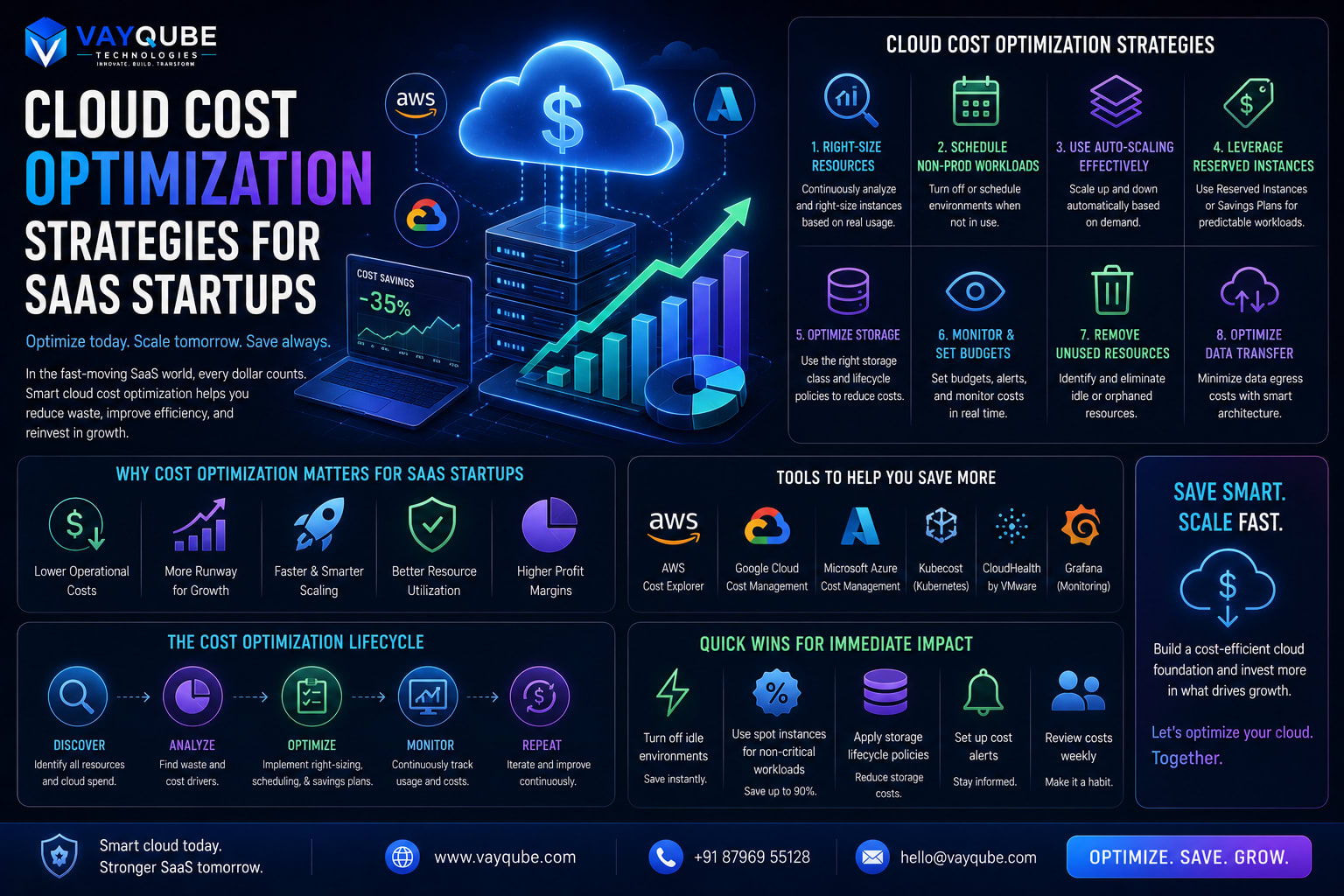
Cloud Cost Optimization Strategies for SaaS Startups
Learn how to optimize your cloud costs and improve your SaaS startup's bottom line with these actionable strategies and real-world use cases
Vayqube Team
Author


Introduction
Cloud cost optimization is a critical aspect of managing a successful SaaS startup. As companies scale, their cloud expenses can quickly become a significant portion of their operational costs. Effective cloud cost optimization strategies can help SaaS startups reduce their expenses, improve profitability, and allocate more resources to drive growth and innovation.
The importance of cloud cost optimization for SaaS startups cannot be overstated. With the rapid pace of growth and the need to quickly adapt to changing market conditions, SaaS companies must be able to efficiently manage their cloud resources to stay competitive. By optimizing cloud costs, SaaS startups can improve their bottom line, reduce the risk of cost overruns, and enhance their overall financial stability.
This blog post will provide an overview of cloud cost optimization strategies for SaaS startups, including the key challenges and opportunities associated with managing cloud costs. We will explore the importance of monitoring and analyzing cloud usage, identifying areas for cost reduction, and implementing effective cost optimization strategies. The following topics will be covered:
- Understanding cloud cost drivers and usage patterns
- Identifying opportunities for cost reduction and optimization
- Implementing cost-effective cloud architecture and design
- Leveraging cloud provider pricing models and discounts
- Best practices for ongoing cloud cost monitoring and optimization
By the end of this post, SaaS startups will have a clear understanding of the importance of cloud cost optimization and the strategies they can use to reduce their cloud expenses, improve their profitability, and drive long-term growth and success.
Overview of Cloud Cost Optimization
Cloud cost optimization involves a range of activities, including monitoring and analyzing cloud usage, identifying areas for cost reduction, and implementing effective cost optimization strategies. This includes optimizing cloud resource utilization, selecting the most cost-effective cloud services, and leveraging cloud provider pricing models and discounts. By taking a proactive and strategic approach to cloud cost optimization, SaaS startups can reduce their expenses, improve their profitability, and enhance their overall financial stability.
Importance for SaaS Startups
For SaaS startups, cloud cost optimization is particularly important. As these companies grow and scale, their cloud expenses can quickly become a significant portion of their operational costs. By optimizing cloud costs, SaaS startups can improve their bottom line, reduce the risk of cost overruns, and enhance their overall financial stability. This, in turn, can help them drive long-term growth and success, and achieve their business objectives.
Brief Outline of the Blog Post
The remainder of this blog post will provide a detailed overview of cloud cost optimization strategies for SaaS startups. We will explore the key challenges and opportunities associated with managing cloud costs, and provide practical guidance on how to implement effective cost optimization strategies. The post will cover the following topics:
- Cloud cost drivers and usage patterns
- Opportunities for cost reduction and optimization
- Cost-effective cloud architecture and design
- Cloud provider pricing models and discounts
- Ongoing cloud cost monitoring and optimization
By providing a comprehensive overview of cloud cost optimization strategies, this post aims to help SaaS startups reduce their cloud expenses, improve their profitability, and drive long-term growth and success.
Key Considerations
When it comes to cloud cost optimization, there are several key considerations that SaaS startups should keep in mind. These include:
- The need for ongoing monitoring and analysis of cloud usage
- The importance of identifying areas for cost reduction and optimization
- The role of cloud provider pricing models and discounts in reducing costs
- The need for cost-effective cloud architecture and design
- The importance of leveraging automation and other tools to optimize cloud costs
By keeping these considerations in mind, SaaS startups can develop effective cloud cost optimization strategies that help them reduce their expenses, improve their profitability, and drive long-term growth and success.
Why It Matters
Cloud costs can have a significant financial impact on SaaS startups, affecting their bottom line and ability to scale. Inefficient cloud resource management can lead to wasted resources, unnecessary expenses, and reduced profitability.
Financial Impact
The financial implications of cloud costs on SaaS startups cannot be overstated. Cloud expenses can account for a substantial portion of a startup's operational costs, and if not managed properly, can quickly become a major burden. Startups that fail to optimize their cloud costs may struggle to achieve profitability, making it challenging to secure funding or attract investors.
Consequences of Inefficient Management
The consequences of inefficient cloud resource management can be severe. Some of the potential consequences include:
- Reduced profitability and revenue growth
- Increased risk of cost overruns and budget blowouts
- Decreased competitiveness and market share
- Inability to scale and meet growing demand
- Negative impact on customer satisfaction and retention
Benefits of Proactive Optimization
On the other hand, proactive cost optimization can have numerous benefits for SaaS startups. Some of the advantages include:
- Improved profitability and revenue growth
- Enhanced competitiveness and market share
- Increased ability to scale and meet growing demand
- Better customer satisfaction and retention
- Improved cash flow and reduced risk of cost overruns
By prioritizing cloud cost optimization, SaaS startups can ensure they are using their resources efficiently and effectively, minimizing waste and maximizing returns. This enables them to focus on innovation, growth, and delivering value to their customers, rather than being bogged down by unnecessary expenses.
Real-World Examples
Many SaaS startups have successfully implemented cloud cost optimization strategies, achieving significant cost savings and improved profitability. For example, companies like Airbnb and Dropbox have implemented robust cost optimization practices, enabling them to scale efficiently and achieve substantial revenue growth. By adopting similar strategies, other SaaS startups can achieve similar results and improve their overall financial performance.
Implementation Considerations
When implementing cloud cost optimization strategies, SaaS startups should consider several key factors, including:
- Right-sizing resources and eliminating unused or underutilized assets
- Implementing cost-effective pricing models and discount plans
- Optimizing data storage and transfer costs
- Leveraging automation and machine learning to streamline resource management
- Monitoring and analyzing cloud usage and costs in real-time.
Core Architecture
To achieve cloud cost optimization, SaaS startups must focus on designing a cost-effective cloud architecture. This involves understanding the key components that contribute to a scalable and flexible infrastructure.
Key Components
The core components of a cost-effective cloud architecture include:
- Compute resources: selecting the right instance types and sizes to match workload requirements
- Storage solutions: choosing the appropriate storage options, such as object storage or block storage, based on data type and access patterns
- Network architecture: designing a network topology that minimizes data transfer costs and optimizes traffic flow
- Database management: selecting a database service that provides the required performance and scalability at an optimal cost
Scalability and Flexibility
Scalability and flexibility are crucial in cloud cost optimization, as they enable SaaS startups to adapt to changing workload demands and avoid overprovisioning. By designing a scalable architecture, companies can:
- quickly scale up or down to match changing workload requirements
- take advantage of cost-effective pricing models, such as pay-as-you-go or reserved instances
- reduce waste and minimize unused resources
Key Technologies and Tools
Several key technologies and tools can help SaaS startups optimize their cloud costs, including:
- Cloud management platforms: providing visibility into resource utilization and costs
- Cost monitoring and analytics tools: enabling companies to track and optimize their cloud spend
- Automation and orchestration tools: streamlining provisioning and deployment processes to reduce manual errors and optimize resource allocation
- Serverless computing: allowing companies to run applications without provisioning or managing servers, reducing costs and increasing scalability
By leveraging these technologies and designing a cost-effective cloud architecture, SaaS startups can minimize waste, optimize resource utilization, and achieve significant cost savings. This, in turn, can help them improve their bottom line, increase competitiveness, and drive business growth.
Implementation Considerations
When implementing a cost-effective cloud architecture, SaaS startups should consider several factors, including:
- workload requirements and patterns
- resource utilization and allocation
- cost models and pricing structures
- scalability and flexibility requirements
- security and compliance considerations
By carefully evaluating these factors and designing a cloud architecture that meets their specific needs, SaaS startups can achieve cloud cost optimization and improve their overall business performance.
Real-World Examples
Many SaaS startups have successfully implemented cloud cost optimization strategies, achieving significant cost savings and improving their scalability and flexibility. For example, companies like Netflix and Airbnb have used cloud management platforms and cost monitoring tools to optimize their cloud spend and improve their resource utilization. By following similar strategies, other SaaS startups can achieve similar results and drive business success.
Business Benefits
Implementing cloud cost optimization strategies can have a significant impact on the financial health and competitiveness of SaaS startups. By reducing operational expenses, these companies can allocate more resources to drive growth, improve profitability, and enhance their market position.
The key benefits of cloud cost optimization include:
- Reduced operational expenses, resulting in lower overhead costs and improved budget efficiency
- Improved profitability and competitiveness, enabling SaaS startups to invest in research and development, marketing, and sales
- Enhanced ability to invest in growth and innovation, such as expanding into new markets, developing new features, or improving customer experience
Financial Impact
Cloud cost optimization can help SaaS startups reduce their operational expenses by identifying and eliminating unused or underutilized resources, negotiating better pricing with cloud providers, and optimizing resource utilization. This can result in significant cost savings, which can be reinvested in the business to drive growth and innovation.
Competitive Advantage
By optimizing cloud costs, SaaS startups can improve their profitability and competitiveness, enabling them to respond more quickly to changing market conditions and customer needs. This can be a key differentiator in a crowded market, where companies that can innovate and adapt quickly are more likely to succeed.
Growth and Innovation
The ability to invest in growth and innovation is critical for SaaS startups, as it enables them to stay ahead of the competition and deliver new and innovative solutions to their customers. By optimizing cloud costs, these companies can free up more resources to invest in research and development, expand into new markets, and improve their customer experience.
Real-World Examples
Many SaaS startups have successfully implemented cloud cost optimization strategies to reduce their operational expenses and improve their profitability. For example, companies like Zoom and Slack have optimized their cloud infrastructure to reduce costs and improve scalability, enabling them to invest in new features and expand into new markets.
Implementation Considerations
When implementing cloud cost optimization strategies, SaaS startups should consider their specific business needs and goals. This includes identifying areas where costs can be reduced, negotiating with cloud providers, and optimizing resource utilization. By taking a proactive and strategic approach to cloud cost optimization, these companies can achieve significant cost savings and improve their competitiveness in the market.
Scalability
Scalability is a critical component of cloud cost optimization, as it enables SaaS startups to adapt to changing workload demands while minimizing unnecessary expenses. By scaling cloud resources efficiently, startups can ensure that their infrastructure is optimized for performance and cost.
Strategies for Scaling Cloud Resources
To achieve scalability in cloud cost optimization, SaaS startups can employ several strategies, including:
- Right-sizing resources to match workload demands
- Implementing auto-scaling to dynamically adjust resource allocation
- Leveraging cloud-native services to optimize resource utilization
- Using containerization and serverless computing to improve resource efficiency
Best Practices for Managing Scalability and Cost
Effective management of scalability and cost requires a combination of technical expertise and financial acumen. Some best practices for managing scalability and cost include:
- Monitoring workload demands and resource utilization in real-time
- Implementing cost allocation and tagging to track expenses
- Establishing clear policies and procedures for resource provisioning and de-provisioning
- Continuously evaluating and optimizing cloud resource utilization to minimize waste and reduce costs
Real-World Examples of Scalable Cloud Cost Optimization
Several SaaS startups have successfully implemented scalable cloud cost optimization strategies to improve their bottom line. For example, a cloud-based e-commerce platform used auto-scaling to dynamically adjust resource allocation during peak shopping seasons, resulting in a 30% reduction in cloud costs. Another example is a SaaS-based productivity suite that leveraged containerization and serverless computing to optimize resource utilization, achieving a 25% reduction in cloud expenses.
Production Considerations for Scalable Cloud Cost Optimization
When implementing scalable cloud cost optimization strategies in production, SaaS startups should consider several key factors, including:
- Ensuring seamless integration with existing infrastructure and applications
- Implementing robust monitoring and logging to track resource utilization and costs
- Establishing clear communication channels with stakeholders to ensure transparency and accountability
- Continuously evaluating and refining cloud cost optimization strategies to ensure they remain aligned with business objectives and workload demands.
Implementation Challenges
Implementing cloud cost optimization strategies can be complex and daunting for SaaS startups. Several common obstacles can hinder the success of these initiatives, including technical, organizational, and cultural hurdles.
Technical Hurdles
Technical challenges can arise from the complexity of cloud infrastructure, lack of visibility into usage patterns, and inadequate tooling for cost monitoring and optimization. Some common technical obstacles include:
- Inadequate tagging and categorization of resources, making it difficult to track usage and allocate costs
- Insufficient automation, leading to manual errors and inefficiencies in resource provisioning and scaling
- Limited visibility into reserved instance usage and expiration dates, resulting in missed opportunities for cost savings
Organizational Barriers
Organizational barriers can also impede the implementation of cloud cost optimization strategies. These may include:
- Lack of clear ownership and accountability for cloud costs, leading to a lack of prioritization and focus
- Insufficient communication and collaboration between development, operations, and finance teams, resulting in misaligned priorities and objectives
- Limited training and expertise in cloud cost optimization, making it difficult to develop and implement effective strategies
Change Management and Training
Effective change management and training are critical to overcoming these technical and organizational hurdles. This includes:
- Developing a clear understanding of the business case for cloud cost optimization and communicating it to all stakeholders
- Providing training and education on cloud cost optimization best practices, tools, and techniques
- Establishing a culture of cost awareness and accountability, encouraging teams to take ownership of cloud costs and optimize resources accordingly
Overcoming Implementation Challenges
To overcome these implementation challenges, SaaS startups can take a structured approach to cloud cost optimization. This includes:
- Developing a comprehensive cloud cost optimization strategy, aligned with business objectives and priorities
- Establishing a cross-functional team to oversee cloud cost optimization, with clear ownership and accountability
- Implementing cloud cost monitoring and optimization tools, and providing training and education on their use
- Continuously monitoring and evaluating cloud costs, identifying areas for improvement and optimizing resources accordingly.
Use Cases
Cloud cost optimization is crucial for SaaS startups to ensure scalability and profitability. Real-world examples of successful cloud cost optimization can be seen in various industries.
Industry-Specific Examples
- E-commerce: Online retailers can optimize cloud costs by scaling resources during peak shopping seasons and reducing them during off-peak seasons.
- Financial Services: Banks and financial institutions can optimize cloud costs by implementing reserved instances for predictable workloads and using spot instances for variable workloads.
- Healthcare: Healthcare providers can optimize cloud costs by using cloud-based storage for medical records and implementing data lifecycle management to reduce storage costs.
Lessons Learned
Successful cloud cost optimization strategies often involve a combination of technical and business considerations. Some key lessons learned from cloud cost optimization successes and failures include:
- Right-sizing resources: Ensuring that resources are properly sized for workloads can help avoid unnecessary costs.
- Monitoring and analytics: Implementing monitoring and analytics tools can help identify areas for cost optimization and track the effectiveness of optimization efforts.
- Reserved instances: Using reserved instances can provide significant cost savings for predictable workloads.
Best Practices
Industry-specific best practices for cloud cost optimization include:
- Automating scaling: Automating scaling to match changing workloads can help ensure that resources are used efficiently.
- Using cloud-native services: Using cloud-native services can help reduce costs and improve scalability.
- Implementing cost governance: Implementing cost governance policies and procedures can help ensure that cloud costs are properly managed and optimized.
Real-World Examples
Real-world examples of successful cloud cost optimization include:
- A media streaming company that reduced cloud costs by 30% by implementing a cloud cost optimization strategy that included right-sizing resources and using reserved instances.
- A software development company that reduced cloud costs by 25% by implementing a cloud cost optimization strategy that included automating scaling and using cloud-native services.
- A healthcare provider that reduced cloud costs by 20% by implementing a cloud cost optimization strategy that included implementing data lifecycle management and using cloud-based storage.
Production Considerations
When implementing cloud cost optimization strategies in production, it's essential to consider factors such as:
- Scalability: Ensuring that resources can scale to meet changing workloads.
- Reliability: Ensuring that resources are reliable and available when needed.
- Security: Ensuring that resources are properly secured to protect sensitive data.
Best Practices
To achieve effective cloud cost optimization, SaaS startups must adhere to key principles that guide their strategy and implementation.
Key Principles
The foundation of a successful cloud cost optimization strategy lies in several key principles:
- Aligning cloud usage with business objectives to ensure that every resource utilized contributes to the bottom line
- Implementing a culture of cost awareness across the organization to encourage responsible cloud resource usage
- Continuously monitoring and analyzing cloud costs to identify areas of inefficiency
- Adopting a flexible and scalable approach to cloud resource allocation to match changing business needs
Monitoring and Analyzing Cloud Costs
Strategies for monitoring and analyzing cloud costs are crucial for identifying inefficiencies and areas of waste. This includes:
- Utilizing cloud provider native tools and third-party solutions to gain deep insights into cloud usage and costs
- Setting up real-time alerts and notifications for unusual usage patterns or cost spikes
- Conducting regular audits of cloud resources to ensure they are properly tagged, categorized, and allocated
Optimizing Cloud Resource Utilization
Techniques for optimizing cloud resource utilization and allocation focus on ensuring that resources are used efficiently and effectively. This can be achieved through:
- Right-sizing cloud instances and resources to match actual workload requirements
- Implementing auto-scaling to dynamically adjust resource allocation based on demand
- Leveraging reserved instances and spot instances for cost savings on predictable and flexible workloads
- Adopting a serverless architecture where possible to eliminate idle resource costs
By following these best practices, SaaS startups can significantly reduce their cloud costs, improve their bottom line, and allocate more resources to drive innovation and growth.
Real-World Implementation
In real-world scenarios, SaaS startups have successfully implemented these strategies to achieve significant cost savings. For example, by moving from on-demand instances to reserved instances for predictable workloads, a startup can save up to 75% on compute costs. Similarly, adopting a serverless architecture can eliminate the costs associated with provisioning, patching, and scaling servers.
Production Considerations
When implementing cloud cost optimization strategies in production environments, it's essential to consider the potential impact on application performance, reliability, and security. This includes ensuring that cost-saving measures do not compromise the quality of service or introduce new risks. By carefully evaluating these factors, SaaS startups can achieve cloud cost optimization without sacrificing the integrity of their applications.
Frequently Asked Questions
Cloud cost optimization is a critical aspect of managing a SaaS startup's infrastructure. As companies navigate the complexities of cloud computing, several questions arise. Here are some frequently asked questions about cloud cost optimization, along with detailed answers to help guide your decision-making process.
Common Concerns
Some of the most common questions about cloud cost optimization include:
- What are the key factors that drive up cloud costs, and how can they be managed?
- How do I choose the right cloud provider for my SaaS startup, considering factors such as cost, scalability, and security?
- What role does reserved instances play in reducing cloud costs, and how can they be effectively utilized?
- How can I ensure that my cloud infrastructure is optimized for both cost and performance, without compromising on either aspect?
Answers and Solutions
Addressing these concerns requires a deep understanding of cloud cost optimization strategies. For instance, understanding the pricing models of different cloud providers and choosing the one that best aligns with your startup's needs can significantly reduce costs. Additionally, implementing a robust monitoring and analytics system can help identify areas of inefficiency and provide insights into optimization opportunities.
Additional Resources
For further learning and support, consider exploring the following resources:
- Cloud provider documentation and guides, which offer detailed information on pricing, services, and best practices.
- Industry reports and research studies, which provide insights into cloud cost optimization trends and strategies.
- Online communities and forums, where you can connect with other professionals and experts in the field, share experiences, and learn from their successes and challenges.
Real-World Examples
Real-world examples of successful cloud cost optimization strategies can provide valuable lessons for SaaS startups. For example, companies that have implemented automated scaling and resource allocation have seen significant reductions in cloud costs. Similarly, startups that have adopted a multi-cloud approach, leveraging the strengths of different providers, have been able to optimize their infrastructure for both cost and performance.
Production Considerations
When implementing cloud cost optimization strategies in a production environment, it's essential to consider factors such as:
- The potential impact on application performance and user experience
- The need for continuous monitoring and optimization to ensure ongoing cost savings
- The importance of security and compliance in cloud infrastructure management
- The role of DevOps and automation in streamlining cloud cost optimization processes
Next Steps
By addressing these questions and concerns, SaaS startups can develop a comprehensive understanding of cloud cost optimization and make informed decisions about their cloud infrastructure. This knowledge can help guide the implementation of effective cost optimization strategies, ultimately leading to significant cost savings and improved scalability.
Conclusion
In conclusion, cloud cost optimization is a critical aspect of SaaS startups' financial management, enabling them to allocate resources more efficiently and improve their bottom line. The key takeaways from this discussion include the importance of monitoring and analyzing cloud usage, right-sizing resources, and leveraging cost-effective pricing models.
Summary of Key Takeaways
- Implementing a cloud cost optimization strategy can help SaaS startups reduce their cloud expenditure by up to 30%
- Regularly monitoring and analyzing cloud usage is crucial for identifying areas of inefficiency and opportunities for cost savings
- Right-sizing resources, such as instances and storage, can help minimize waste and optimize costs
- Leveraging cost-effective pricing models, such as reserved instances and spot instances, can provide significant discounts
- Automating cloud cost optimization tasks can help streamline the process and reduce manual errors
Final Thoughts and Recommendations
As SaaS startups continue to grow and scale, it's essential to prioritize cloud cost optimization to maintain a competitive edge. By implementing a well-planned cloud cost optimization strategy, startups can reduce their cloud expenditure, improve their profitability, and allocate more resources to drive innovation and growth. We recommend that SaaS startups:
- Develop a cloud cost optimization plan that aligns with their business goals and objectives
- Continuously monitor and analyze their cloud usage to identify areas for improvement
- Leverage cloud cost optimization tools and services to streamline the process and reduce manual errors
- Regularly review and adjust their cloud cost optimization strategy to ensure it remains effective and aligned with their business needs
Call to Action
To get started with implementing cloud cost optimization strategies, SaaS startups can take the following steps:
- Assess their current cloud usage and identify areas for improvement
- Develop a cloud cost optimization plan that aligns with their business goals and objectives
- Leverage cloud cost optimization tools and services to streamline the process and reduce manual errors
- Continuously monitor and analyze their cloud usage to ensure their cloud cost optimization strategy remains effective and aligned with their business needs. By taking these steps, SaaS startups can reduce their cloud expenditure, improve their profitability, and drive innovation and growth.
Related Vayqube Resources
- Best Software Development Company In Usa
- Best Software Development Company In New York
- Best Saas Development Company In Usa
- Best Saas Development Company In New York
- Best Fintech Software Development Company In Usa
- Best Fintech Software Development Company In New York
Next Step
If your systems are struggling with scalability, automation, architecture complexity, or operational efficiency, it's time to modernize your infrastructure and workflows.
👉 Talk to a Vayqube solution architect and build systems designed for long-term production growth: