
UPI App Development: A Comprehensive Guide
Develop a seamless UPI payment experience with our guide, featuring best practices for business impact, scalability, and implementation strategy
Vayqube Team
Author
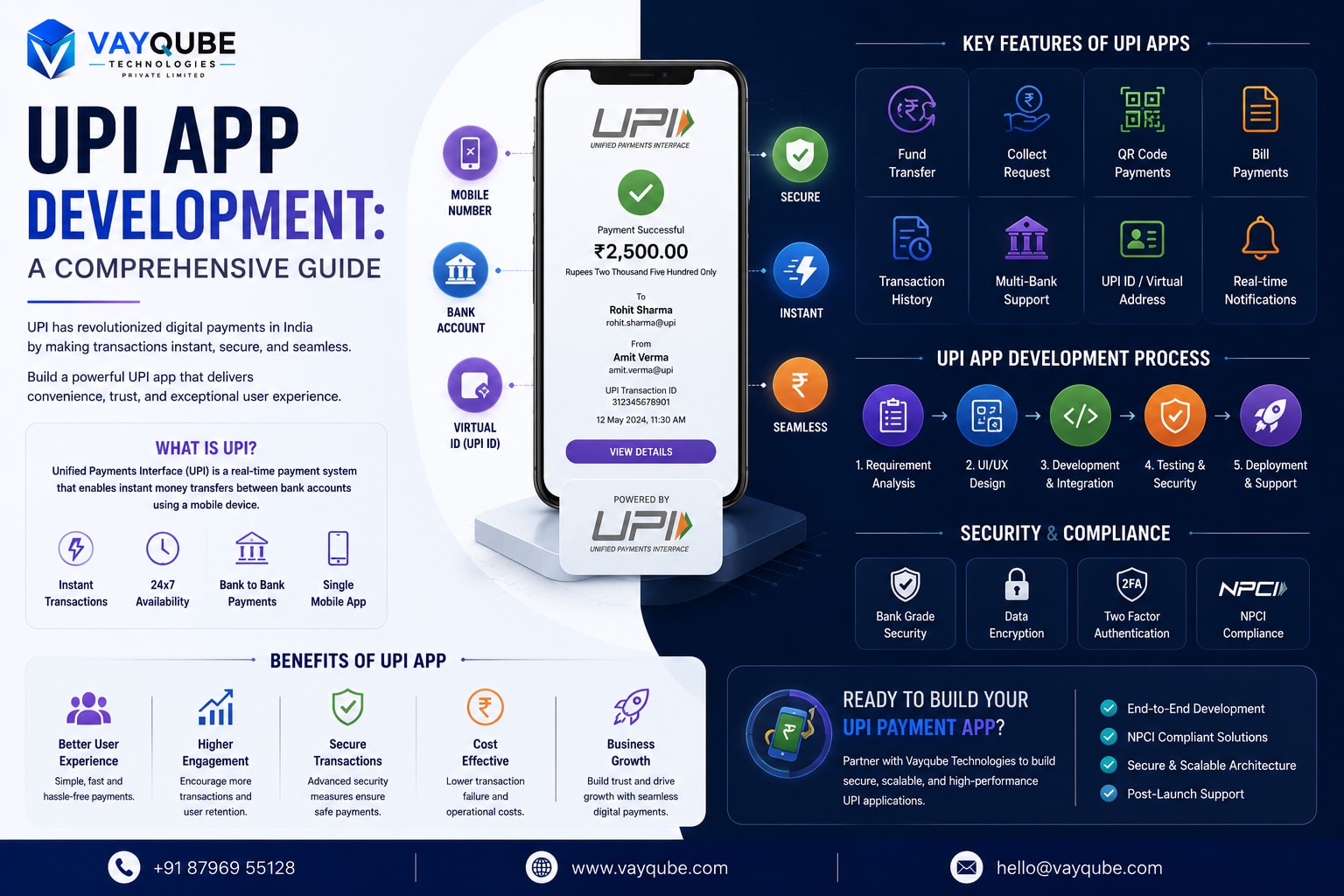
Introduction to UPI App Development
UPI, or Unified Payments Interface, has revolutionized the way individuals and businesses make transactions in India. With its simplicity and convenience, UPI has become an essential component of the country's digital payment ecosystem. The importance of UPI in digital payments cannot be overstated, as it enables fast, secure, and cost-effective transactions between bank accounts.
Overview of UPI App Development
UPI app development involves creating mobile applications that leverage the UPI platform to facilitate transactions. This includes developing user-friendly interfaces, integrating with banks and payment gateways, and ensuring the security and integrity of transactions. A well-designed UPI app can provide a seamless payment experience, making it an attractive option for individuals and businesses alike.
Importance of UPI in Digital Payments
The significance of UPI in digital payments lies in its ability to facilitate interoperable transactions between different banks and payment systems. This has opened up new avenues for businesses to accept payments, and for individuals to make transactions conveniently. Some key benefits of UPI include:
- Fast and secure transactions
- Low transaction costs
- Wide acceptance across banks and payment systems
- Convenience and ease of use
As the digital payment landscape continues to evolve, the demand for UPI-enabled apps is on the rise. Businesses and developers are recognizing the potential of UPI to transform the way transactions are made, and are investing in UPI app development to capitalize on this trend. With its potential to drive financial inclusion and facilitate economic growth, UPI is poised to play a vital role in shaping the future of digital payments in India.
Key Considerations for UPI App Development
When developing a UPI-enabled app, several factors need to be considered to ensure a successful implementation. These include:
- Compliance with regulatory requirements
- Integration with banks and payment gateways
- Security and risk management
- User experience and interface design
- Scalability and performance optimization
By understanding these considerations and developing a well-designed UPI app, businesses can tap into the growing demand for digital payments and provide a convenient, secure, and reliable payment experience for their customers.
Real-World Applications of UPI
UPI has numerous real-world applications, ranging from person-to-person transactions to business-to-business payments. Some examples include:
- Mobile wallets and payment apps
- E-commerce platforms and online marketplaces
- Bill payment and utility services
- Transportation and ticketing systems
These applications demonstrate the versatility and potential of UPI to transform various aspects of the digital payment ecosystem. As UPI continues to evolve and improve, we can expect to see even more innovative applications and use cases emerge.
Implementation Strategy
A successful UPI app development project requires a well-planned implementation strategy. This involves:
- Conducting market research and analyzing user requirements
- Designing a user-friendly interface and experience
- Developing a secure and scalable architecture
- Integrating with banks and payment gateways
- Testing and deploying the app
By following a structured approach and considering the key factors involved in UPI app development, businesses can ensure a smooth and successful implementation, and provide a high-quality payment experience for their customers.
Why It Matters
The benefits of UPI for businesses and consumers are numerous, driving its rapid adoption across various industries. For businesses, UPI enables fast, secure, and cost-effective transactions, reducing the need for physical currency and increasing customer convenience. This, in turn, leads to increased sales and revenue growth.
Benefits for Businesses and Consumers
Some key benefits of UPI include:
- Reduced transaction costs
- Increased transaction speed
- Enhanced security through two-factor authentication
- Simplified payment processes
- Improved customer experience
The growing demand for UPI-based services is also driven by the increasing use of smartphones and mobile internet in India. As more people gain access to digital payment systems, the demand for UPI-based services is expected to continue growing, creating new opportunities for businesses and entrepreneurs.
Growing Demand for UPI-Based Services
The demand for UPI-based services is driven by several factors, including:
- Government initiatives to promote digital payments
- Increasing adoption of mobile payments
- Growing e-commerce industry
- Rising demand for convenient and secure payment methods
As the use of UPI continues to grow, businesses must adapt to this changing landscape by integrating UPI into their payment systems. This requires a deep understanding of UPI app development, including the technical requirements, implementation strategies, and production considerations.
Real-World Examples
Several businesses have already successfully integrated UPI into their payment systems, including:
- E-commerce companies like Flipkart and Amazon
- Food delivery services like Zomato and Swiggy
- Ride-hailing services like Ola and Uber These companies have seen significant benefits from UPI integration, including increased transaction volumes and reduced payment processing costs.
Implementation Strategy
To implement UPI successfully, businesses must develop a clear strategy that takes into account their specific needs and requirements. This includes:
- Choosing the right UPI platform and API
- Ensuring compliance with regulatory requirements
- Implementing robust security measures
- Providing a seamless user experience
By understanding the benefits and challenges of UPI app development, businesses can create effective implementation strategies that drive growth, increase customer satisfaction, and stay ahead of the competition.
Core Architecture
To develop a robust UPI app, it's essential to understand the technical requirements and key components of the underlying architecture.
Technical Requirements
The technical requirements for UPI app development include:
- Compliance with NPCI guidelines and regulations
- Integration with multiple banks and payment systems
- Support for various transaction types, such as person-to-person and person-to-merchant
- Robust security measures to protect user data and prevent fraud
- Scalability to handle high volumes of transactions and user traffic
Key Components
The key components of UPI architecture include:
- Payment Service Provider (PSP): responsible for facilitating transactions and interacting with banks
- Bank Interface: enables communication between the PSP and participating banks
- Transaction Processor: handles transaction processing, settlement, and reconciliation
- User Interface: provides a seamless and intuitive experience for users to initiate and manage transactions
- Security Layer: implements encryption, authentication, and access controls to ensure the security and integrity of transactions and user data
Implementation Considerations
When implementing the UPI architecture, consider the following factors:
- Choose a scalable and reliable technology stack to support high volumes of transactions
- Ensure compliance with regulatory requirements and industry standards
- Implement robust security measures to prevent fraud and protect user data
- Design a user-friendly interface to simplify the transaction process and improve user adoption
- Develop a comprehensive testing strategy to ensure the app's stability and performance in production environments
Production Readiness
To ensure production readiness, consider the following:
- Conduct thorough testing, including functional, performance, and security testing
- Implement monitoring and logging mechanisms to detect and respond to issues
- Develop a disaster recovery plan to ensure business continuity in case of outages or failures
- Establish a feedback loop to collect user input and continuously improve the app's functionality and user experience
- Ensure the app's infrastructure can scale to meet growing demand and transaction volumes
Business Benefits
The development of a UPI (Unified Payments Interface) app offers numerous benefits for businesses, driving growth and improving customer satisfaction.
Enhanced Customer Experience
Increased customer engagement and retention are key advantages of UPI app development. By providing a seamless and convenient payment experience, businesses can build trust and loyalty with their customers. This, in turn, leads to increased customer retention and ultimately, revenue growth.
Cost Savings and Revenue Growth
UPI app development also presents opportunities for cost savings and revenue growth. By reducing the need for physical payment infrastructure and minimizing transaction fees, businesses can save significantly on operational costs. Additionally, UPI apps can facilitate faster payment processing, reducing the risk of delayed or failed transactions. This can lead to increased revenue and improved cash flow for businesses.
Some of the key benefits of UPI app development for businesses include:
- Reduced transaction fees
- Increased payment processing speed
- Improved customer satisfaction and retention
- Enhanced security and compliance
- Opportunities for revenue growth through new payment channels and services
Real-World Examples
In real-world scenarios, UPI app development has enabled businesses to expand their customer base and increase revenue. For example, a retail business can use a UPI app to offer customers a convenient and secure payment option, increasing the likelihood of repeat business and positive word-of-mouth. Similarly, a financial services company can use a UPI app to provide customers with a range of payment and banking services, increasing customer engagement and loyalty.
Implementation Strategy
To realize the business benefits of UPI app development, businesses should focus on developing a robust and scalable implementation strategy. This includes:
- Conducting thorough market research and analysis
- Defining clear business requirements and goals
- Designing a user-friendly and secure payment interface
- Ensuring compliance with relevant regulations and standards
- Testing and iterating the app to ensure optimal performance and user experience
By following this approach, businesses can ensure a successful UPI app development project that drives growth, improves customer satisfaction, and increases revenue.
Production Readiness
To ensure production readiness, businesses should prioritize testing and quality assurance. This includes conducting thorough security testing, performance testing, and user acceptance testing to ensure the app meets the required standards. Additionally, businesses should develop a comprehensive deployment strategy, including plans for maintenance, updates, and support. By prioritizing production readiness, businesses can ensure a smooth and successful launch of their UPI app.
Scalability
To ensure the success of a UPI app, it's crucial to design it with scalability in mind. This involves planning for high traffic and transactions, as well as ensuring a seamless user experience during peak hours.
Designing for High Traffic
When designing a UPI app for high traffic, several factors come into play. These include:
- Load balancing to distribute traffic evenly across servers
- Autoscaling to dynamically adjust resources based on demand
- Caching to reduce the load on databases and improve response times
- Content delivery networks (CDNs) to reduce latency and improve user experience
Ensuring Seamless User Experience
Ensuring a seamless user experience during peak hours requires careful planning and implementation. This can be achieved by:
- Implementing a robust and reliable payment gateway
- Optimizing database queries and transactions for high performance
- Using queueing systems to manage high volumes of transactions
- Implementing real-time monitoring and analytics to quickly identify and resolve issues
Production Considerations
When deploying a UPI app in production, several considerations come into play. These include:
- Ensuring compliance with relevant regulations and standards
- Implementing robust security measures to protect user data and prevent fraud
- Providing 24/7 support and maintenance to ensure high uptime and quick issue resolution
- Continuously monitoring and optimizing the app for performance and user experience
Real-World Examples
Real-world examples of scalable UPI apps include those used by large banks and financial institutions. These apps are designed to handle millions of transactions per day, and provide a seamless user experience even during peak hours. By studying these examples and implementing similar design principles, developers can create UPI apps that are highly scalable and reliable.
Implementation Strategy
To implement a scalable UPI app, developers should follow a structured approach. This includes:
- Conducting thorough requirements gathering and planning
- Designing a robust and scalable architecture
- Implementing automated testing and deployment scripts
- Continuously monitoring and optimizing the app for performance and user experience
- Providing ongoing support and maintenance to ensure high uptime and quick issue resolution.
Implementation Challenges
When developing a UPI app, several challenges can arise that can impact the overall success of the project. Two of the most significant implementation challenges are security and compliance considerations, and technical hurdles in integrating UPI with existing systems.
Security and Compliance Considerations
Security is a top priority when developing a UPI app, as it involves sensitive financial information. Some key security considerations include:
- Data encryption to protect user data
- Secure authentication and authorization mechanisms
- Regular security audits and testing to identify vulnerabilities
- Compliance with regulatory requirements, such as PCI-DSS and GDPR Ensuring the security and compliance of a UPI app is crucial to prevent data breaches and maintain user trust.
Technical Hurdles in Integration
Integrating UPI with existing systems can be a complex task, requiring significant technical expertise. Some common technical hurdles include:
- Integrating with multiple banks and payment systems
- Handling different payment scenarios, such as refunds and cancellations
- Ensuring seamless user experience across different platforms and devices
- Managing errors and exceptions, such as failed transactions and network errors To overcome these technical hurdles, it is essential to have a deep understanding of the UPI architecture and the existing systems being integrated.
Real-World Examples
In real-world scenarios, UPI app development can be more complex than expected. For instance, a company may need to integrate UPI with their existing e-commerce platform, which can require significant customization and testing. Additionally, ensuring security and compliance can be a challenge, especially when dealing with sensitive financial information. By understanding these implementation challenges, developers can better plan and execute their UPI app development projects.
Production Readiness
To ensure production readiness, it is crucial to conduct thorough testing and quality assurance. This includes testing the app's security, performance, and functionality under different scenarios and user loads. Additionally, developers should ensure that the app is scalable and can handle a large volume of transactions, as well as provide reliable customer support and maintenance. By considering these factors, developers can ensure that their UPI app is production-ready and can provide a seamless user experience.
Use Cases
UPI app development has numerous applications in various industries, transforming the way businesses and individuals conduct transactions.
Person-to-Person Transactions
Person-to-person (P2P) transactions are a significant use case for UPI apps. These transactions enable users to send and receive money instantly, using just their mobile phones. Key benefits of P2P transactions via UPI apps include:
- Convenience: users can transfer funds anytime, anywhere
- Speed: transactions are processed in real-time
- Low costs: UPI transactions often have lower fees compared to traditional payment methods
- Security: UPI apps provide a secure platform for transactions, with multiple layers of authentication and encryption
Merchant Payments and E-commerce Integrations
Merchant payments and e-commerce integrations are another crucial use case for UPI apps. By integrating UPI payment gateways into their platforms, merchants and e-commerce businesses can:
- Offer customers a seamless and convenient payment experience
- Reduce transaction costs and increase revenue
- Enhance customer satisfaction and loyalty
- Expand their customer base, as UPI apps are widely adopted in many regions
Some examples of merchant payments and e-commerce integrations include:
- Online shopping platforms
- Food delivery and restaurant services
- Travel booking and ticketing platforms
- Bill payment and utility services
These use cases demonstrate the versatility and potential of UPI app development, and how it can be applied to various industries and businesses to improve transaction efficiency and customer experience.
Real-World Examples
In real-world scenarios, UPI apps have been successfully implemented in various industries, such as:
- Payment platforms, like Google Pay and PhonePe
- E-commerce platforms, like Amazon and Flipkart
- Food delivery services, like Zomato and Swiggy
- Travel booking platforms, like MakeMyTrip and Yatra
These examples illustrate the potential of UPI app development to transform the way businesses and individuals conduct transactions, and highlight the importance of considering production readiness and implementation strategy when developing UPI apps.
Implementation Strategy
When implementing UPI app development, businesses should consider factors such as:
- Scalability: ensuring the app can handle a large volume of transactions
- Security: implementing robust security measures to protect user data and transactions
- User experience: designing an intuitive and user-friendly interface
- Integration: integrating the UPI app with existing systems and platforms
By considering these factors and developing a well-planned implementation strategy, businesses can ensure a successful UPI app development project that meets their needs and provides a seamless transaction experience for their customers.
Production Readiness
To ensure production readiness, businesses should:
- Conduct thorough testing and quality assurance
- Implement monitoring and analytics tools to track performance and identify areas for improvement
- Develop a maintenance and update plan to ensure the app remains secure and functional
- Ensure compliance with relevant regulations and standards
By following these steps, businesses can ensure their UPI app is production-ready and provides a reliable and efficient transaction experience for their customers.
Best Practices
To ensure the success of a UPI app, it's essential to follow best practices that prioritize user experience, interface design, testing, and quality assurance.
User Experience and Interface Design Principles
A well-designed UPI app should provide an intuitive and seamless user experience. Key principles include:
- Simple and consistent navigation
- Clear and concise language
- Prominent display of essential features and transactions
- Minimal steps for transaction completion
- Robust security measures, such as two-factor authentication and encryption
A user-centered design approach can help identify and address potential pain points, ensuring that the app meets the needs and expectations of its target audience.
Testing and Quality Assurance Strategies
Thorough testing and quality assurance are critical to ensuring the reliability, performance, and security of a UPI app.
- Conduct thorough unit testing, integration testing, and user acceptance testing
- Perform regular security audits and penetration testing
- Implement automated testing frameworks to streamline the testing process
- Gather feedback from users and iterate on the app to address any issues or concerns
By prioritizing testing and quality assurance, developers can identify and fix issues before they become major problems, ensuring a smooth and reliable user experience.
Implementation Considerations
When implementing a UPI app, it's essential to consider the following factors:
- Compliance with regulatory requirements and industry standards
- Integration with existing systems and infrastructure
- Scalability and performance to handle high volumes of transactions
- Robust security measures to protect user data and prevent fraud
By carefully considering these factors, developers can ensure that their UPI app is not only functional but also secure, scalable, and compliant with relevant regulations.
Real-World Examples
Real-world examples of successful UPI app implementations can provide valuable insights and lessons for developers.
- India's BHIM app, which has enabled millions of users to make digital payments
- Paytm, which has become one of the largest digital payment platforms in India
- Google Pay, which has simplified online transactions for users worldwide
These examples demonstrate the potential of UPI apps to transform the way people make payments and conduct financial transactions.
Production Readiness
To ensure production readiness, developers should focus on:
- Conducting thorough testing and quality assurance
- Implementing robust security measures
- Ensuring scalability and performance
- Providing regular updates and maintenance
By following these best practices and considering real-world examples, developers can create UPI apps that are not only functional but also secure, scalable, and user-friendly.
Frequently Asked Questions
Common questions and misconceptions about UPI app development can hinder the progress of businesses looking to integrate this technology. Here are some key points to consider:
- What is the primary benefit of using UPI in app development?
- How does UPI enhance the user experience in mobile applications?
- What are the security implications of implementing UPI in an app?
Troubleshooting and Resources
When developing a UPI-enabled app, troubleshooting is an essential part of the process. Some common issues that may arise include:
- Transaction failures due to incorrect payment credentials
- Integration errors with the UPI platform
- Difficulty in handling refunds and cancellations
To address these issues, developers can refer to the official UPI documentation and seek support from the UPI community forums. Additionally, many UPI service providers offer developer support and resources to help with integration and troubleshooting.
Common Misconceptions
There are several misconceptions about UPI app development that can lead to confusion and delays. For example:
- UPI is only suitable for small transactions
- UPI requires complex infrastructure and maintenance
- UPI is not secure for sensitive transactions
In reality, UPI can handle transactions of all sizes, requires minimal infrastructure, and provides robust security features to protect user data.
Real-World Examples
To illustrate the effectiveness of UPI app development, consider the following examples:
- A mobile wallet app that uses UPI to enable fast and secure transactions
- An e-commerce platform that integrates UPI for seamless checkout experiences
- A banking app that leverages UPI for instant fund transfers
These examples demonstrate the versatility and potential of UPI in various industries and use cases.
Production Considerations
When developing a UPI-enabled app for production, consider the following factors:
- Scalability and performance to handle high traffic and transaction volumes
- Security and compliance with regulatory requirements
- User experience and interface design to ensure seamless transactions
By addressing these factors, businesses can ensure a successful and efficient UPI app development process that meets the needs of their users and drives business growth.
Conclusion
In conclusion, UPI app development has revolutionized the way businesses and individuals make transactions in India. With its simplicity, security, and convenience, UPI has become an essential component of the country's digital payment ecosystem.
Key Takeaways
The key takeaways from this comprehensive guide include:
- Understanding the core architecture of UPI and its components
- Recognizing the business benefits of UPI, such as increased customer engagement and reduced transaction costs
- Implementing scalable and secure UPI solutions to meet growing customer demands
- Overcoming implementation challenges, such as integrating with existing systems and ensuring compliance with regulatory requirements
- Leveraging best practices, such as using secure protocols and conducting regular security audits
Future Outlook
The future of UPI app development looks promising, with opportunities for innovation and growth. As the Indian government continues to promote digital payments, we can expect to see:
- Increased adoption of UPI among businesses and individuals
- Development of new use cases, such as cross-border transactions and micro-payments
- Improved security features, such as advanced encryption and biometric authentication
- Enhanced customer experience, with personalized payment solutions and real-time transaction updates
Recommendations
To stay ahead in the UPI app development landscape, businesses should:
- Invest in scalable and secure infrastructure to support growing customer demands
- Focus on providing a seamless customer experience, with intuitive interfaces and real-time transaction updates
- Explore new use cases and innovations, such as blockchain-based payments and artificial intelligence-powered payment assistants
- Collaborate with regulatory bodies and industry stakeholders to ensure compliance and promote the growth of the digital payment ecosystem
Real-World Examples
Companies like Paytm, Google Pay, and PhonePe have already demonstrated the potential of UPI app development in India. These companies have:
- Developed scalable and secure UPI solutions that meet the growing demands of customers
- Introduced innovative features, such as payment links and QR code-based transactions
- Collaborated with merchants and businesses to promote the adoption of UPI
- Invested in customer education and awareness programs to promote the benefits of digital payments
Production Considerations
When developing UPI apps, businesses should consider production-ready solutions that meet the following criteria:
- Scalability: ability to handle growing customer demands and high transaction volumes
- Security: implementation of advanced security features, such as encryption and biometric authentication
- Compliance: adherence to regulatory requirements and industry standards
- Customer experience: provision of intuitive interfaces, real-time transaction updates, and personalized payment solutions
Related Vayqube Resources
- Best Mobile App Development Company In India
- Best Mobile App Development Company In Singapore City
- Why Most Ai Projects Fail Before Production
- How To Build Fintech Application Payments Security Scaling
- Top Mobile App Development Company In India
- Best Mobile App Development Company In New York
Next Step
If your systems are struggling with scalability, automation, architecture complexity, or operational efficiency, it's time to modernize your infrastructure and workflows.
👉 Talk to a Vayqube solution architect and build systems designed for long-term production growth: