
SaaS Startups Cut Infrastructure Costs
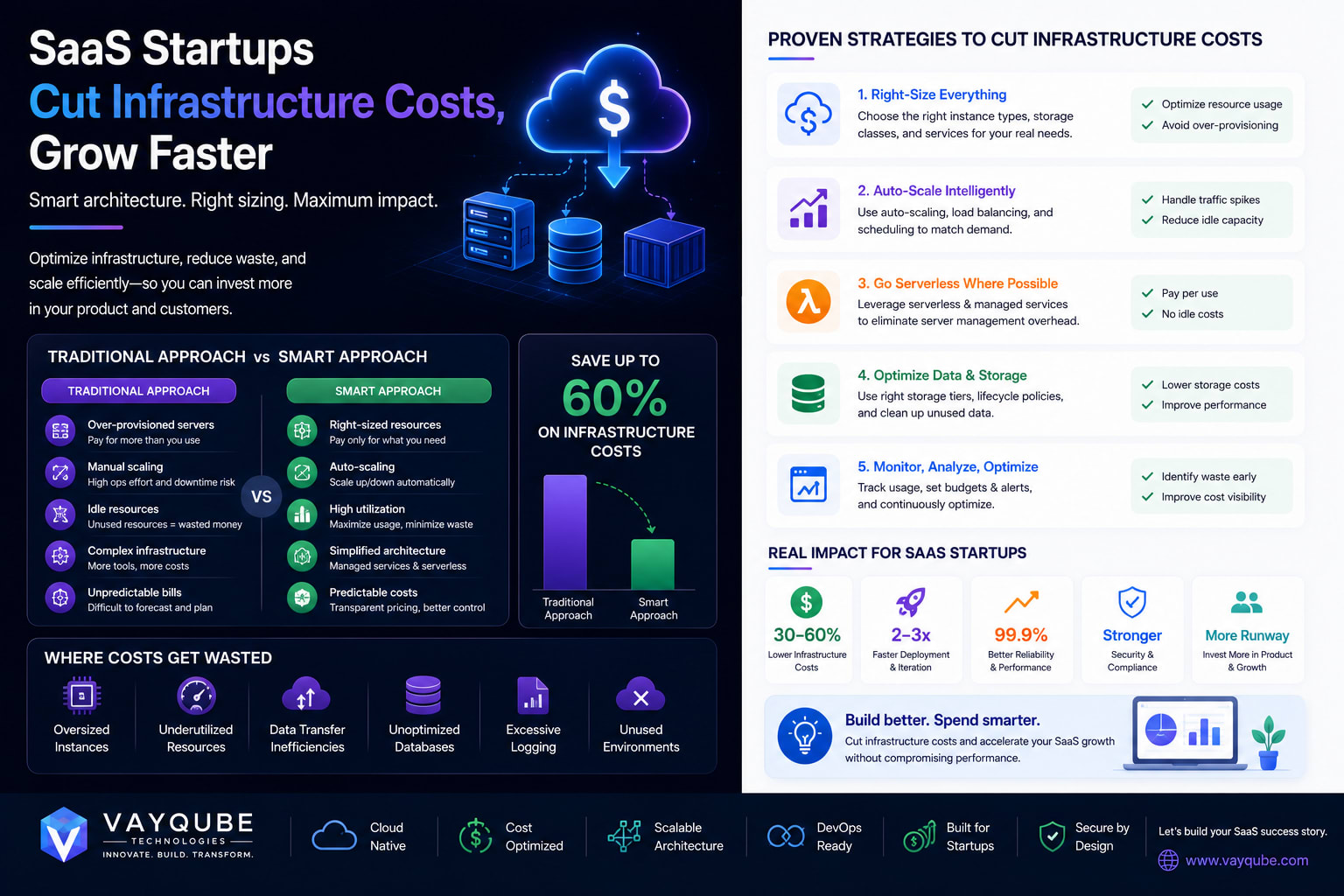
SaaS startups can significantly reduce infrastructure costs by adopting cloud-based services and optimizing resource utilization. By implementing cost-effective solutions, startups can improve scalability and focus on core business growth.
Vayqube Team
Author
Introduction to SaaS Infrastructure Costs
SaaS startups face numerous challenges, and one of the most significant is managing infrastructure costs. The expense of building and maintaining the infrastructure necessary to support a SaaS application can be substantial, affecting the bottom line and limiting the ability to invest in other critical areas of the business.
The Cost Challenge
Infrastructure costs encompass a wide range of expenses, including servers, storage, networking, and software licenses. For SaaS startups, these costs can quickly escalate as the user base grows, making it difficult to predict and manage expenses. The cloud has mitigated some of these issues by offering scalability and on-demand pricing, but the fundamental challenge remains: how to balance the need for reliable, high-performance infrastructure with the pressure to keep costs under control.
Why Cost Reduction Matters
For startups, reducing infrastructure costs is not just about saving money; it's about creating a sustainable business model. By minimizing unnecessary expenses, SaaS startups can allocate more resources to product development, marketing, and sales, thereby driving growth and competitiveness. Moreover, in a market where margins can be thin, the ability to maintain a lean cost structure can be a decisive factor in achieving profitability and attracting investors.
Key Areas for Cost Reduction
Several strategies can be employed to cut infrastructure costs, including:
- Optimizing resource utilization to ensure that infrastructure resources are used efficiently
- Leveraging cloud pricing models that offer discounts for committed usage or spot instances
- Implementing cost-effective security and monitoring solutions
- Adopting a multi-cloud or hybrid cloud strategy to avoid vendor lock-in and exploit the best pricing options
Real-World Considerations
In the real world, SaaS startups must navigate these strategies while ensuring high availability, security, and performance of their applications. This balance requires careful planning, continuous monitoring, and a deep understanding of both the business and technical implications of infrastructure cost reduction. By focusing on these areas, SaaS startups can significantly reduce their infrastructure costs without compromising on the quality of service, ultimately enhancing their competitiveness and long-term viability.
Financial Impact
The financial impact of infrastructure costs on SaaS startups cannot be overstated. For many startups, infrastructure expenses are a significant portion of their operational costs, often rivaling or even surpassing the costs of talent acquisition and retention. When these costs are high, they can severely limit a startup's ability to invest in growth initiatives, such as marketing, sales, and product development. This, in turn, can hinder the startup's ability to scale and compete effectively in the market.
Cost Structure
A typical SaaS startup's cost structure includes expenses such as server hosting, database management, security, and networking. These costs can quickly add up, especially as the startup grows its user base and expands its offerings. Moreover, the need for reliability, scalability, and high performance adds complexity and expense to the infrastructure. Startups that fail to manage these costs efficiently risk eroding their profit margins and undermining their long-term viability.
Competitive Advantage
On the other hand, SaaS startups that successfully cut their infrastructure costs can gain a significant competitive advantage. By reducing their operational expenses, these startups can allocate more resources to innovation, customer acquisition, and retention. This can lead to faster growth, improved customer satisfaction, and increased market share. Furthermore, cost savings can also enable startups to offer more competitive pricing, making their products or services more attractive to price-sensitive customers.
Key benefits of cost savings include:
- Increased budget for growth initiatives
- Improved profit margins
- Enhanced competitiveness through pricing or product offerings
- Greater flexibility to respond to market changes or opportunities
- Better positioning for long-term sustainability and success
Real-World Examples
Several SaaS startups have successfully reduced their infrastructure costs by adopting cloud-native architectures, leveraging open-source technologies, or implementing efficient resource utilization strategies. For instance, startups that have migrated their applications to cloud platforms like AWS or Azure have often reported significant reductions in infrastructure costs. Similarly, those that have adopted containerization and orchestration tools like Kubernetes have been able to optimize resource usage and lower expenses. By embracing these strategies, SaaS startups can free up more resources to drive innovation and growth.
Core Architecture
To achieve significant infrastructure cost savings, SaaS startups must adopt a core architecture that leverages modern technologies. This approach enables scalability, flexibility, and reduced operational expenses.
Cloud-Based Infrastructure
Cloud-based infrastructure is a fundamental component of cost-effective SaaS architecture. By utilizing cloud services, startups can eliminate the need for on-premise hardware and software, reducing capital expenditures and minimizing maintenance costs. Key benefits of cloud-based infrastructure include:
- On-demand resource allocation
- Scalability and flexibility
- Enhanced reliability and uptime
- Reduced administrative burdens
Serverless Computing
Serverless computing is another crucial element in reducing infrastructure costs. This paradigm allows SaaS startups to run applications without managing or provisioning servers, resulting in significant cost savings. Serverless computing offers:
- Pay-per-use pricing models
- Automated scaling and resource allocation
- Enhanced security and reduced administrative tasks
- Faster deployment and iteration cycles
Microservices
Microservices architecture is a design approach that structures applications as collections of small, independent services. This methodology enables SaaS startups to develop, deploy, and maintain applications more efficiently, resulting in lower infrastructure costs. Key advantages of microservices include:
- Improved scalability and fault tolerance
- Enhanced flexibility and adaptability
- Reduced complexity and easier maintenance
- Faster time-to-market and increased agility
By incorporating cloud-based infrastructure, serverless computing, and microservices into their core architecture, SaaS startups can significantly reduce infrastructure costs while improving scalability, flexibility, and overall competitiveness.
Business Benefits
The shift to cloud-based infrastructure has numerous benefits for SaaS startups, with reduced capital expenditures being a significant advantage. By leveraging cloud services, startups can avoid the upfront costs associated with purchasing and maintaining hardware and software. This, in turn, enables them to allocate more resources to core business activities, such as product development and marketing.
Reduced Capital Expenditures
With cloud infrastructure, SaaS startups can scale their operations without incurring substantial capital expenditures. This is particularly important for early-stage companies, where cash flow is often a concern. By reducing the need for significant upfront investments, cloud infrastructure enables startups to conserve capital and focus on driving growth.
Increased Operational Efficiency
Cloud infrastructure also enables SaaS startups to increase operational efficiency, as it provides a highly scalable and on-demand environment for application deployment. This allows startups to quickly respond to changing business needs, such as sudden spikes in user traffic or demand for new features. Moreover, cloud infrastructure automates many routine tasks, freeing up IT resources for more strategic activities.
Improved Scalability
Improved scalability is another key benefit of cloud infrastructure for SaaS startups. As user bases grow, cloud infrastructure can seamlessly scale to meet increasing demand, ensuring that applications remain performant and responsive. This scalability also enables startups to quickly deploy new applications and services, facilitating innovation and experimentation. Some key advantages of improved scalability include:
- Faster time-to-market for new applications and services
- Enhanced user experience through performant and responsive applications
- Increased agility in responding to changing market conditions and user needs
- Better support for DevOps practices, such as continuous integration and delivery
Scalability
To achieve scalability, SaaS startups must design their infrastructure to handle increased traffic and demand. This can be achieved through several strategies, including horizontal scaling, load balancing, and autoscaling.
Horizontal Scaling
Horizontal scaling involves adding more servers or instances to the infrastructure to distribute the workload. This approach allows startups to handle increased traffic without sacrificing performance. By adding more servers, startups can ensure that their application remains responsive and available to users, even during peak periods.
Some key considerations for horizontal scaling include:
- Server configuration and provisioning
- Load balancing and traffic distribution
- Automated scaling and instance management
- Monitoring and logging to ensure optimal performance
Load Balancing
Load balancing is a critical component of scalability, as it ensures that incoming traffic is distributed evenly across multiple servers. This helps to prevent any single server from becoming overwhelmed and reduces the risk of downtime or poor performance. Startups can use load balancing algorithms, such as round-robin or least connections, to distribute traffic and optimize resource utilization.
Autoscaling
Autoscaling takes horizontal scaling to the next level by automatically adding or removing servers based on demand. This approach ensures that startups can quickly respond to changes in traffic or workload, without manual intervention. Autoscaling can be based on various metrics, such as CPU utilization, memory usage, or request latency, to ensure that the infrastructure is always optimized for performance.
Some real-world examples of autoscaling include:
- Scaling up during peak hours to handle increased traffic
- Scaling down during off-peak hours to reduce costs
- Scaling out to handle unexpected spikes in demand
- Scaling in to handle reduced demand and optimize resources
By implementing these scalability strategies, SaaS startups can ensure that their infrastructure is always optimized for performance, availability, and cost-effectiveness. This enables them to focus on developing their application and delivering value to their customers, rather than worrying about the underlying infrastructure.
Implementation Challenges
When implementing cost-cutting measures for infrastructure, SaaS startups face several challenges. These challenges can hinder the ability to reduce costs effectively and efficiently.
Technical Debt
Technical debt refers to the costs associated with implementing quick fixes or workarounds that need to be revisited later. In the context of infrastructure cost-cutting, technical debt can arise from shortcuts taken to reduce costs in the short term, which may lead to increased complexity and costs in the long term. For example, using a low-cost but less scalable solution may seem like a good idea initially, but it can lead to significant rework and costs when the solution needs to be scaled up.
Some common sources of technical debt include:
- Using outdated or unsupported technologies to reduce costs
- Implementing custom solutions that are not well-documented or maintainable
- Ignoring security or compliance requirements to save on upfront costs
Legacy System Integration
Legacy system integration is another challenge that SaaS startups face when trying to cut infrastructure costs. Many organizations have existing systems and infrastructure that are difficult to integrate with new, cost-effective solutions. This can lead to increased costs and complexity, as well as decreased efficiency and productivity.
Some strategies for addressing legacy system integration challenges include:
- Developing APIs or interfaces to connect legacy systems with new solutions
- Using data migration tools to transfer data from legacy systems to new solutions
- Implementing hybrid solutions that combine elements of legacy systems with new solutions
Change Management
Change management is a critical aspect of implementing cost-cutting measures for infrastructure. It involves managing the people and process changes that are required to implement new solutions and ensure that they are adopted and used effectively. This can be a significant challenge, especially in organizations with limited resources or expertise.
Some best practices for change management include:
- Developing a clear communication plan to inform stakeholders of changes and their benefits
- Providing training and support to ensure that users are able to effectively use new solutions
- Monitoring and addressing resistance to change, and providing incentives for adoption and use.
Use Cases
SaaS startups can significantly reduce infrastructure costs by leveraging cloud-based services and scalable architecture. This section explores real-world use cases where SaaS startups have successfully cut infrastructure costs.
Real-time Data Processing
Real-time data processing is a critical component of many SaaS applications. By using cloud-based services such as AWS Lambda or Google Cloud Functions, SaaS startups can process large amounts of data in real-time without having to maintain expensive infrastructure. For example, a SaaS startup that provides real-time analytics can use cloud-based services to process user data and provide instant insights, reducing the need for costly on-premise infrastructure.
E-commerce Platforms
E-commerce platforms are another area where SaaS startups can cut infrastructure costs. By using scalable e-commerce platforms such as Shopify or BigCommerce, SaaS startups can quickly deploy and manage online stores without having to maintain expensive infrastructure. Additionally, these platforms often provide built-in scalability and security features, reducing the need for SaaS startups to invest in these areas.
Mobile Applications
Mobile applications are a key area of focus for many SaaS startups. By using cloud-based services such as AWS Amplify or Google Firebase, SaaS startups can quickly develop and deploy mobile applications without having to maintain expensive infrastructure. These services provide a range of features, including authentication, storage, and analytics, reducing the need for SaaS startups to invest in these areas. Some key benefits of using cloud-based services for mobile applications include:
- Reduced infrastructure costs
- Increased scalability and reliability
- Faster development and deployment times
- Improved security and compliance features
By leveraging these use cases, SaaS startups can significantly reduce infrastructure costs and improve their overall bottom line. Additionally, by using cloud-based services and scalable architecture, SaaS startups can quickly respond to changing market conditions and improve their competitiveness.
Best Practices
To minimize infrastructure costs, SaaS startups must adopt a strategic approach to resource management. This involves implementing best practices that optimize resource utilization, reduce waste, and leverage cost-effective solutions.
Right-Sizing Resources
Right-sizing resources is critical to avoiding unnecessary costs. This involves continuously monitoring application workload and adjusting resource allocation accordingly. By doing so, startups can ensure that their infrastructure is adequately provisioned to meet demand, without over-provisioning and incurring unnecessary expenses. Some key considerations include:
- Analyzing application usage patterns to identify areas of inefficiency
- Implementing auto-scaling to dynamically adjust resource allocation
- Using containerization to optimize resource utilization
Monitoring Usage Patterns
Monitoring usage patterns is essential to understanding how resources are being utilized. This involves tracking key metrics such as CPU utilization, memory usage, and network traffic. By analyzing these metrics, startups can identify areas of inefficiency and optimize their infrastructure accordingly. Some key tools and techniques include:
- Using monitoring tools such as Prometheus and Grafana to track key metrics
- Implementing logging and analytics to gain insights into application usage
- Using machine learning algorithms to identify patterns and anomalies
Reserved Instances
Reserved instances offer a cost-effective way for startups to provision infrastructure resources. By committing to a fixed period of usage, startups can significantly reduce their infrastructure costs. Some key benefits include:
- Reduced costs compared to on-demand pricing
- Predictable expenses to facilitate budgeting and planning
- Ability to provision resources in advance to meet anticipated demand
By implementing these best practices, SaaS startups can significantly reduce their infrastructure costs and improve their overall profitability. Additionally, by leveraging reserved instances and right-sizing resources, startups can better manage their infrastructure expenses and allocate resources more effectively.
FAQ
To help SaaS startups navigate the process of cutting infrastructure costs, we've compiled a list of frequently asked questions.
Common Cost Reduction Strategies
The most common infrastructure cost reduction strategies include:
- Right-sizing resources to match actual usage
- Leveraging reserved instances or spot instances for non-production workloads
- Implementing autoscaling to dynamically adjust resource allocation
- Using cost-effective storage options, such as object storage or cold storage
- Optimizing database performance to reduce instance sizes and costs
These strategies can be applied to various aspects of a SaaS startup's infrastructure, from compute and storage to networking and databases.
Measuring Effectiveness
To measure the effectiveness of cost reduction efforts, SaaS startups can track key metrics, such as:
- Total Cost of Ownership (TCO)
- Return on Investment (ROI)
- Cost savings as a percentage of total infrastructure spend
- Resource utilization rates
- User experience and application performance metrics
By monitoring these metrics, startups can determine whether their cost reduction efforts are having the desired impact and make adjustments as needed to optimize their infrastructure spend.
Additional Considerations
When evaluating the effectiveness of cost reduction efforts, SaaS startups should also consider factors such as:
- The potential impact on scalability and performance
- The level of complexity introduced by cost reduction measures
- The trade-offs between cost savings and other business objectives, such as user experience and feature development
By taking a holistic approach to cost reduction and considering multiple factors, SaaS startups can make informed decisions that balance cost savings with business needs.
Real-World Examples
Real-world examples of successful cost reduction strategies include:
- Using cloud-native services to reduce the administrative burden and cost of managing infrastructure
- Implementing a cloud-agnostic approach to avoid vendor lock-in and reduce costs
- Leveraging open-source tools and technologies to reduce software costs and increase customization options
These examples illustrate the potential for creative and effective cost reduction strategies that can help SaaS startups achieve their business objectives while minimizing infrastructure spend.
Conclusion
In summary, SaaS startups can significantly cut infrastructure costs by adopting a strategic approach to their architecture and implementation. The key takeaways from this discussion include:
- Optimizing core architecture for scalability and efficiency
- Leveraging business benefits such as reduced operational expenses and increased agility
- Overcoming implementation challenges through careful planning and execution
- Applying best practices to ensure production readiness and reliability
The future outlook on SaaS infrastructure cost reduction is promising, with emerging trends and technologies offering even more opportunities for optimization. Some of these trends include:
- Increased adoption of serverless computing and edge computing
- Growing use of artificial intelligence and machine learning for infrastructure optimization
- Rising importance of cybersecurity and data protection in SaaS infrastructure
As SaaS startups continue to grow and evolve, it is essential to stay focused on infrastructure cost reduction strategies that can help drive business success. By prioritizing scalability, efficiency, and reliability, SaaS companies can unlock new opportunities for growth and innovation, while also improving their bottom line.
The real-world examples and use cases highlighted in this discussion demonstrate the potential for significant cost savings and business benefits through strategic infrastructure planning. By applying these lessons and staying ahead of the curve on emerging trends and technologies, SaaS startups can position themselves for long-term success and competitiveness in a rapidly changing market.
In terms of future developments, we can expect to see even more innovative solutions and technologies emerge that can help SaaS startups cut infrastructure costs. Some potential areas of focus include:
- Further advancements in cloud computing and containerization
- Increased use of automation and orchestration tools for infrastructure management
- Growing importance of sustainability and environmental responsibility in SaaS infrastructure planning
By staying informed and adaptable, SaaS startups can continue to thrive and grow, while also reducing their infrastructure costs and environmental footprint.
Related Vayqube Resources
- Cloud Cost Optimization Strategies For Saas Startups
- Startups Building Ai Products Without Large Teams
- The Real Cost Of Building Ai Products
- How To Build Fintech Application Payments Security Scaling
- Best Mobile App Development Company In Usa
- Best Mobile App Development Company In New York
Next Step
If your systems are struggling with scalability, automation, architecture complexity, or operational efficiency, it's time to modernize your infrastructure and workflows.
👉 Talk to a Vayqube solution architect and build systems designed for long-term production growth: