Digital Lending
Financial Technology
Fintech Innovations
Future of Finance

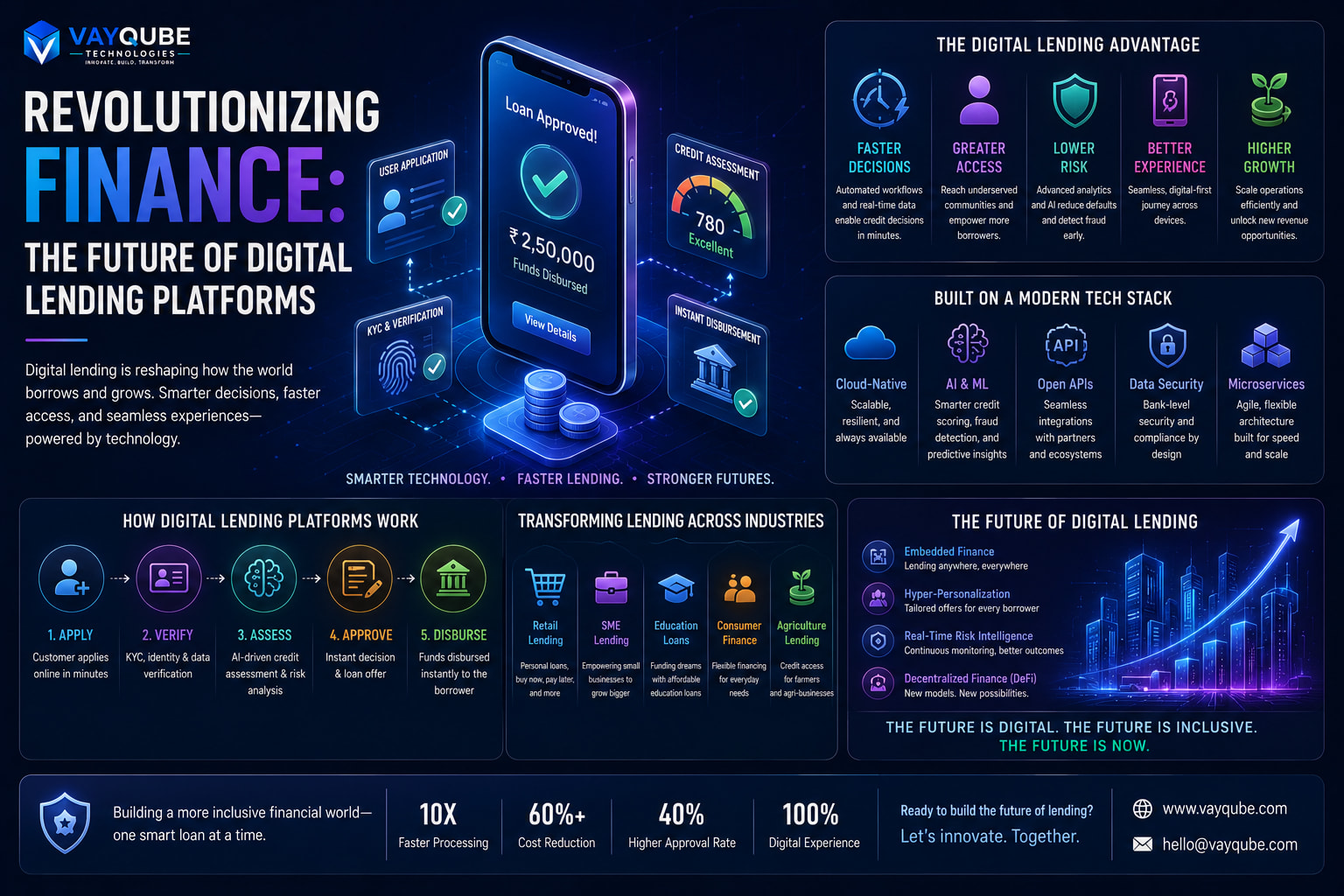
Revolutionizing Finance: The Future of Digital Lending Platforms

The future of digital lending platforms holds immense promise, with innovations in AI, blockchain, and data analytics set to revolutionize the way financial institutions operate and individuals access credit.

V

Vayqube Team

Author

2026-06-24 13 min read
Revolutionizing Finance: The Future of Digital Lending PlatformsRevolutionizing Finance: The Future of Digital Lending Platforms

Evolution of Lending Technology

The digital lending landscape has undergone significant transformations over the years, driven by advances in technology and changing consumer behaviors. Traditional lending institutions have had to adapt to the rise of online platforms, which offer greater convenience, speed, and accessibility. The evolution of lending technology has enabled the development of digital lending platforms that can process loan applications, verify creditworthiness, and disburse funds in a matter of minutes.

Key Drivers of Innovation

Several factors have contributed to the growth of digital lending platforms, including:

  • Advances in data analytics and machine learning, which enable more accurate credit risk assessments
  • Increasing demand for online financial services, driven by the proliferation of smartphones and mobile devices
  • Regulatory reforms, which have created new opportunities for non-traditional lenders to enter the market
  • Growing awareness of the need for financial inclusion, which has led to the development of platforms that serve underserved populations

Importance of Innovation in Finance

Innovation in finance is crucial for driving economic growth, improving financial inclusion, and increasing access to capital for individuals and businesses. Digital lending platforms have the potential to revolutionize the way financial institutions operate, by providing:

  • Faster and more efficient loan processing, which can reduce costs and improve customer satisfaction
  • Greater transparency and accountability, through the use of blockchain and other distributed ledger technologies
  • More accurate credit risk assessments, which can reduce the risk of default and improve loan quality
  • New opportunities for financial inclusion, by providing access to capital for underserved populations and small businesses

Real-World Examples

Several digital lending platforms have already demonstrated the potential of innovation in finance, including:

  • Online lenders that use alternative credit scoring models to evaluate loan applications
  • Peer-to-peer lending platforms that connect borrowers with investors
  • Digital platforms that provide financial services to small businesses and entrepreneurs These examples illustrate the potential of digital lending platforms to transform the financial landscape, by providing greater access to capital, improving efficiency, and reducing costs.

Why It Matters

The future of digital lending platforms has significant implications for various stakeholders, including lenders, borrowers, and the broader economy.

Financial Inclusion

Digital lending platforms can increase financial inclusion by providing access to credit for underserved populations, such as small businesses, low-income individuals, and those in rural areas. This can be achieved through alternative credit scoring models, mobile payments, and online applications. For instance, digital lenders can use social media and online behavior to assess creditworthiness, reducing the need for traditional credit history.

Benefits for Lenders and Borrowers

The benefits of digital lending platforms are numerous for both lenders and borrowers. For lenders, these platforms offer:

  • Increased efficiency in loan processing and disbursement
  • Reduced operational costs
  • Access to a broader customer base
  • Improved risk assessment and management

For borrowers, digital lending platforms provide:

  • Faster loan approvals and disbursements
  • More competitive interest rates
  • Increased transparency in loan terms and conditions
  • Improved customer experience through online portals and mobile apps

Role in Economic Growth

Digital lending platforms can contribute to economic growth by:

  • Increasing access to capital for small businesses and entrepreneurs
  • Supporting financial inclusion and reducing income inequality
  • Creating new job opportunities in the fintech sector
  • Encouraging innovation and competition in the lending industry

The impact of digital lending platforms on economic growth can be significant, particularly in emerging markets where access to traditional credit is limited. By providing alternative channels for lending, these platforms can help stimulate economic activity, increase GDP, and improve living standards. As the digital lending industry continues to evolve, it is likely to play an increasingly important role in shaping the future of finance and promoting economic growth.

Implementation and Production Considerations

To realize the full potential of digital lending platforms, implementation and production considerations are crucial. This includes:

  • Developing robust and secure technology infrastructure
  • Ensuring compliance with regulatory requirements
  • Implementing effective risk management and credit scoring models
  • Providing high-quality customer support and service

By addressing these considerations, digital lenders can build trust with their customers, minimize risks, and maximize the benefits of their platforms. As the industry continues to grow and mature, it is likely that we will see increased innovation, improved efficiency, and greater financial inclusion.


Core Architecture

The core architecture of digital lending platforms is designed to facilitate efficient and secure loan origination, servicing, and management. Key components of these platforms include:

  • Loan origination systems for automated credit decisioning and application processing
  • Loan servicing systems for managing loan portfolios and customer interactions
  • Integration layers for connecting with external systems and data sources
  • Analytics and reporting tools for monitoring performance and optimizing operations

Integration with Existing Financial Systems

Digital lending platforms must integrate seamlessly with existing financial systems, such as core banking systems, payment processors, and credit bureaus. This integration enables real-time data exchange, automated workflows, and enhanced decision-making. By leveraging APIs, messaging protocols, and data standards, digital lending platforms can connect with a wide range of financial systems, including:

  • Core banking systems for account management and transaction processing
  • Payment processors for facilitating loan disbursements and repayments
  • Credit bureaus for retrieving credit reports and scores

Security and Compliance Measures

Security and compliance are critical considerations for digital lending platforms, as they handle sensitive customer data and financial transactions. To ensure the integrity and confidentiality of this information, digital lending platforms must implement robust security measures, such as:

  • Encryption and access controls to protect customer data
  • Multi-factor authentication and authorization to prevent unauthorized access
  • Regular security audits and penetration testing to identify vulnerabilities
  • Compliance with regulatory requirements, such as GDPR, CCPA, and PCI-DSS, to ensure adherence to industry standards and best practices.

Implementation Strategy

When implementing a digital lending platform, financial institutions should consider a phased approach, starting with a pilot program or proof-of-concept to test and refine the platform. This approach enables institutions to:

  • Assess the platform's functionality and performance
  • Identify and address potential integration and security issues
  • Develop a comprehensive change management plan to ensure a smooth transition to the new platform
  • Monitor and evaluate the platform's impact on business operations and customer experience, making adjustments as needed to optimize results.

Production Readiness

To ensure production readiness, digital lending platforms must be thoroughly tested and validated, including:

  • Functional testing to verify platform functionality and performance
  • Integration testing to ensure seamless connectivity with external systems
  • Security testing to identify and address potential vulnerabilities
  • User acceptance testing to validate the platform's usability and user experience.

By following a structured approach to implementation and testing, financial institutions can ensure that their digital lending platforms are production-ready, scalable, and capable of supporting their business growth and customer acquisition strategies.


Business Benefits

The implementation of digital lending platforms is transforming the finance industry in various ways, with numerous benefits for businesses.

Increased Efficiency and Reduced Costs

Digital lending platforms automate many manual processes, reducing the need for physical documentation and minimizing the risk of human error. This automation leads to increased efficiency, as loan applications can be processed faster and with greater accuracy. Additionally, the reduction in manual labor and physical infrastructure results in significant cost savings for financial institutions.

Enhanced Customer Experience

Digital lending platforms provide customers with a seamless and user-friendly experience, allowing them to apply for loans and track their applications online. This convenience enhances customer satisfaction, as borrowers can access loan services from anywhere, at any time. Furthermore, digital platforms enable real-time updates and notifications, keeping customers informed throughout the loan application process.

Improved Risk Management

Digital lending platforms utilize advanced analytics and machine learning algorithms to assess creditworthiness and predict potential risks. This enables financial institutions to make more informed lending decisions, reducing the risk of default and improving overall portfolio quality. By leveraging data and analytics, lenders can identify high-risk borrowers and adjust their lending strategies accordingly, minimizing potential losses.

The integration of digital lending platforms into existing financial systems requires careful consideration of production readiness, scalability, and implementation strategy. As the finance industry continues to evolve, the importance of digital lending platforms will only continue to grow, driving innovation and transformation in the years to come.

Key considerations for businesses implementing digital lending platforms include:

  • Developing a robust implementation strategy
  • Ensuring scalability to meet growing demand
  • Fostering a culture of innovation and continuous improvement
  • Prioritizing production readiness to minimize downtime and ensure seamless integration
  • Leveraging real-world examples and case studies to inform decision-making and optimize platform performance.

By prioritizing these factors, financial institutions can unlock the full potential of digital lending platforms, driving business growth, improving customer satisfaction, and staying ahead of the competition in a rapidly changing market.


Scalability

To ensure the long-term success of digital lending platforms, scalability is a critical factor. As the demand for online lending services continues to grow, platforms must be able to handle high volumes of loan applications without compromising performance.

Handling High Volumes

Digital lending platforms must be designed to handle a large number of loan applications simultaneously. This can be achieved through the use of cloud-based infrastructure, which allows for easy scaling up or down to meet changing demand. Additionally, implementing automated workflows and machine learning algorithms can help to streamline the loan application process, reducing the need for manual intervention and minimizing the risk of errors.

Supporting Growth and Expansion

As digital lending platforms expand into new markets, they must be able to support growing user bases and increasing transaction volumes. This requires a scalable architecture that can accommodate growing demands on the system. By using microservices-based architectures and containerization, digital lending platforms can be built to scale horizontally, adding new instances as needed to handle increased traffic.

Adapting to Changing Market Conditions

Digital lending platforms must also be able to adapt to changing market conditions, such as shifts in regulatory requirements or changes in consumer behavior. This requires a flexible and agile architecture that can be easily updated or modified as needed. By using APIs and modular design principles, digital lending platforms can be built to be highly adaptable, allowing for quick integration of new services or features in response to changing market conditions.

Some key considerations for scalability include:

  • Building a cloud-based infrastructure to support scalability and reliability
  • Implementing automated workflows and machine learning algorithms to streamline the loan application process
  • Using microservices-based architectures and containerization to support horizontal scaling
  • Designing a flexible and agile architecture that can be easily updated or modified as needed
  • Continuously monitoring and analyzing platform performance to identify areas for improvement and optimize scalability.

By prioritizing scalability, digital lending platforms can ensure they are well-equipped to handle the challenges of growth and expansion, and provide a seamless and reliable experience for their users.


Implementation Challenges

Implementing a digital lending platform is a complex task that requires careful consideration of several key factors. One of the primary challenges is overcoming technical hurdles and integration issues.

Technical Hurdles and Integration Issues

Digital lending platforms must integrate with various external systems, such as credit bureaus, payment gateways, and core banking systems. This integration can be challenging due to differences in data formats, APIs, and security protocols. Additionally, ensuring seamless communication between these systems and the platform is crucial to prevent errors, data loss, or security breaches. Some common technical hurdles include:

  • Data migration and synchronization
  • API connectivity and management
  • Security and encryption
  • Scalability and performance optimization

Regulatory Compliance and Risk Management

Another significant challenge is ensuring regulatory compliance and managing risk. Digital lending platforms must comply with various regulations, such as anti-money laundering (AML) and know-your-customer (KYC) laws. This requires implementing robust risk management systems to detect and prevent fraudulent activities. Furthermore, platforms must also ensure compliance with data protection regulations, such as the General Data Protection Regulation (GDPR).

Change Management and Training

Change management and training are also critical components of a successful implementation. Digital lending platforms often require significant changes to business processes and workflows. Therefore, it is essential to provide training to employees and stakeholders to ensure a smooth transition. This includes training on new systems, processes, and policies, as well as ongoing support and maintenance to ensure the platform continues to meet business needs. Key considerations include:

  • Developing a comprehensive change management plan
  • Providing ongoing training and support
  • Monitoring and evaluating platform performance
  • Continuously gathering feedback from users and stakeholders to identify areas for improvement.

As digital lending platforms continue to evolve, it is crucial to address these implementation challenges to ensure a successful and sustainable solution. By understanding the technical, regulatory, and organizational hurdles, businesses can develop effective strategies to overcome them and achieve their goals.


Use Cases

The digital lending platform is poised to revolutionize various aspects of finance, offering a range of use cases that cater to different segments of the market.

Personal Loans and Credit Scoring

Personal loans and credit scoring are areas where digital lending platforms can make a significant impact. By leveraging advanced data analytics and machine learning algorithms, these platforms can provide more accurate credit scoring, enabling lenders to make informed decisions. This, in turn, can lead to more personalized loan offers, better interest rates, and a reduced risk of default. For instance, a digital lending platform can use alternative data sources, such as social media and online behavior, to assess the creditworthiness of borrowers who may not have a traditional credit history.

Small Business Loans and Financing

Small business loans and financing are another critical area where digital lending platforms can add value. Traditional lending institutions often have stringent requirements and lengthy approval processes, making it challenging for small businesses to access capital. Digital lending platforms can streamline the application process, reduce paperwork, and provide faster approval times, enabling small businesses to secure the funding they need to grow and thrive. Moreover, these platforms can offer more flexible repayment terms and competitive interest rates, helping small businesses to manage their cash flow more effectively.

Mortgage Lending and Real Estate Finance

Mortgage lending and real estate finance are complex and often time-consuming processes that can be simplified and accelerated through digital lending platforms. By automating tasks such as loan origination, underwriting, and servicing, these platforms can reduce the administrative burden on lenders, enabling them to process mortgage applications more quickly and efficiently. Additionally, digital lending platforms can provide borrowers with more transparency and control throughout the loan application process, helping to reduce anxiety and uncertainty. For example, a digital lending platform can offer a secure online portal where borrowers can upload documents, track the status of their application, and receive updates on the progress of their loan.

Key benefits of digital lending platforms in these use cases include:

  • Increased efficiency and speed
  • Improved accuracy and reduced risk
  • Enhanced customer experience and engagement
  • Greater accessibility and inclusivity
  • More competitive pricing and terms

By addressing the unique needs and challenges of these use cases, digital lending platforms can help to create a more efficient, transparent, and customer-centric financial system.


Best Practices

To ensure the success and adoption of digital lending platforms, it's crucial to follow best practices that prioritize the user, leverage data, and foster continuous improvement.

Data-Driven Decision Making

Data-driven decision making is essential for digital lending platforms. By leveraging machine learning algorithms and data analytics, lenders can make more informed decisions, reduce risk, and improve customer outcomes. This approach enables lenders to analyze vast amounts of data, including credit history, payment behavior, and market trends, to make accurate predictions and optimize their lending strategies.

Customer-Centric Design and User Experience

A customer-centric design and user experience are vital for digital lending platforms. By putting the customer at the forefront of the design process, lenders can create intuitive, user-friendly interfaces that simplify the lending process and reduce friction. This approach involves understanding customer needs, preferences, and pain points to design personalized experiences that meet their expectations and build trust.

Continuous Monitoring and Evaluation

Continuous monitoring and evaluation are critical for digital lending platforms. By regularly assessing platform performance, lenders can identify areas for improvement, optimize their operations, and ensure compliance with regulatory requirements. This approach involves tracking key performance indicators (KPIs), such as loan approval rates, default rates, and customer satisfaction, to refine the lending process and improve overall efficiency.

Some key considerations for implementing these best practices include:

  • Developing a robust data infrastructure to support data-driven decision making
  • Conducting regular customer feedback surveys to inform design and user experience decisions
  • Establishing a culture of continuous monitoring and evaluation to drive improvement and innovation
  • Investing in ongoing training and education to ensure that staff are equipped to leverage data and technology effectively
  • Fostering a customer-centric mindset throughout the organization to ensure that customer needs are always prioritized.

By following these best practices, digital lending platforms can drive business growth, improve customer outcomes, and stay ahead of the competition in a rapidly evolving financial landscape.


Frequently Asked Questions

The digital lending platform is a complex and multifaceted system, and as such, it raises several questions and concerns among stakeholders. In this section, we will address some of the most common questions and misconceptions surrounding digital lending platforms.

Common Questions and Misconceptions

Some of the most frequently asked questions about digital lending platforms include:

  • What is the security protocol for sensitive customer data?
  • How do digital lending platforms ensure compliance with regulatory requirements?
  • What is the process for resolving disputes or issues with loans?
  • How do digital lending platforms assess creditworthiness and determine interest rates?
  • What is the role of artificial intelligence and machine learning in digital lending platforms?

Addressing Concerns and Doubts

Addressing concerns and doubts is crucial for the successful implementation and adoption of digital lending platforms. Some of the common concerns include:

  • Data privacy and security
  • Regulatory compliance
  • Credit risk assessment
  • Transparency and accountability
  • Customer support and service

To address these concerns, digital lending platforms must prioritize transparency, security, and compliance. This can be achieved through:

  • Implementing robust security protocols and encryption methods
  • Ensuring compliance with regulatory requirements and industry standards
  • Providing clear and concise information about loan terms and conditions
  • Offering reliable and responsive customer support

Additional Resources and Support

For stakeholders who require additional information and support, there are several resources available, including:

  • Industry reports and research studies
  • Webinars and online tutorials
  • Case studies and success stories
  • Regulatory guidelines and compliance frameworks
  • Technical support and troubleshooting services

These resources can provide valuable insights and guidance for stakeholders who are looking to implement or invest in digital lending platforms. By leveraging these resources, stakeholders can make informed decisions and navigate the complex landscape of digital lending with confidence.

Production Readiness and Implementation Strategy

When implementing a digital lending platform, it is essential to consider production readiness and implementation strategy. This includes:

  • Conducting thorough testing and quality assurance
  • Developing a comprehensive implementation plan
  • Ensuring scalability and flexibility
  • Providing ongoing maintenance and support
  • Monitoring and evaluating performance and results

By prioritizing production readiness and implementation strategy, stakeholders can ensure a smooth and successful transition to a digital lending platform. This can help to minimize risks, reduce costs, and maximize returns on investment.

Real-World Examples and Use Cases

Digital lending platforms have numerous real-world applications and use cases, including:

  • Consumer lending and credit scoring
  • Small business lending and financing
  • Mortgage lending and origination
  • Invoice financing and factoring
  • Supply chain financing and procurement

These use cases demonstrate the versatility and potential of digital lending platforms to transform the financial services industry. By exploring these examples and use cases, stakeholders can gain a deeper understanding of the benefits and opportunities of digital lending platforms.


Conclusion

The future of digital lending platforms is poised for significant growth and transformation, driven by advances in technology, changing consumer behaviors, and evolving regulatory landscapes. As we reflect on the key takeaways from this discussion, it's clear that the revolution in finance is well underway.

Summary of Key Takeaways

  • Digital lending platforms are redefining the way financial institutions interact with customers, offering greater convenience, speed, and personalization.
  • A robust core architecture is essential for supporting scalable and secure lending operations, incorporating elements such as cloud infrastructure, APIs, and data analytics.
  • The business benefits of digital lending platforms are numerous, including reduced operational costs, enhanced customer experience, and improved risk management.
  • Successful implementation requires careful consideration of scalability, security, and compliance, as well as a strategic approach to change management and user adoption.

Future Outlook and Predictions

Looking ahead, we can expect digital lending platforms to continue evolving in response to emerging trends and technologies, such as artificial intelligence, blockchain, and the Internet of Things (IoT). As the industry advances, we anticipate seeing increased focus on:

  • Personalized lending experiences, leveraging data and analytics to offer tailored products and services
  • Expanded access to financial services, particularly for underserved or underbanked populations
  • Greater emphasis on security and compliance, as regulatory requirements continue to evolve and tighten

Call to Action and Next Steps

For financial institutions and lenders seeking to capitalize on the opportunities presented by digital lending platforms, the time to act is now. Key next steps include:

  • Conducting a thorough assessment of current infrastructure and operations, to identify areas for improvement and potential roadblocks
  • Developing a strategic roadmap for digital transformation, incorporating clear goals, timelines, and resource allocations
  • Engaging with experienced partners and vendors, to leverage their expertise and support in navigating the complexities of digital lending platform implementation.

Related Vayqube Resources


Next Step

If your systems are struggling with scalability, automation, architecture complexity, or operational efficiency, it's time to modernize your infrastructure and workflows.

👉 Talk to a Vayqube solution architect and build systems designed for long-term production growth:

Contact Vayqube Technologies

Ready to build something powerful?

Book a free 30-minute strategy call.